CHAPTER 4
Lesson 33 · Word order

The order of words
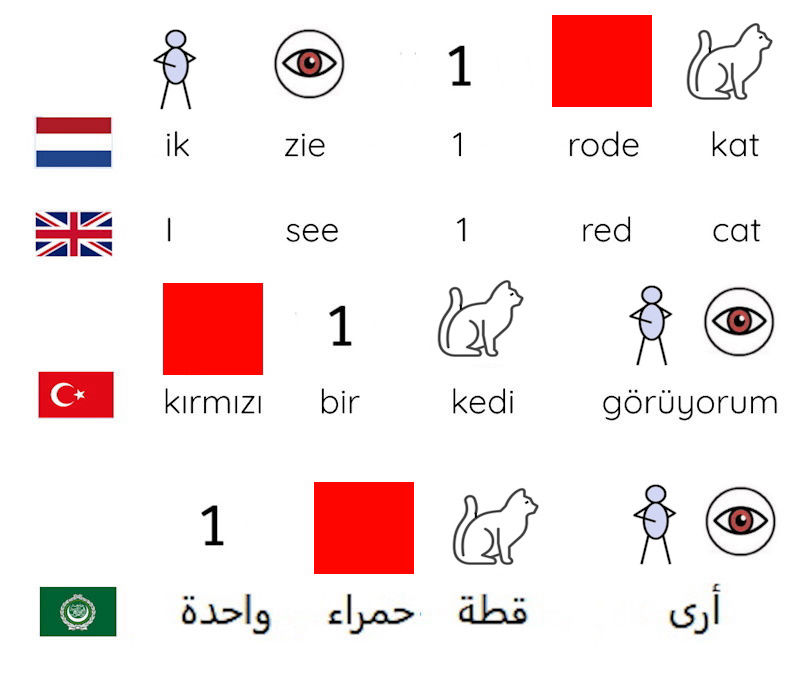
The order of words can vary significantly between different languages. Once again, we present the well-known illustration that powerfully demonstrates this concept, using the sentence "I see 1 red cat" in various languages.
With this sentence, it is evident that Dutch follows the same word order as English. However, this is not always the case. Notably, the Turkish language, for example, shows significant differences in word order compared to English and Dutch.
Let us start by examining the word order with a simple sentence:
Conclusion
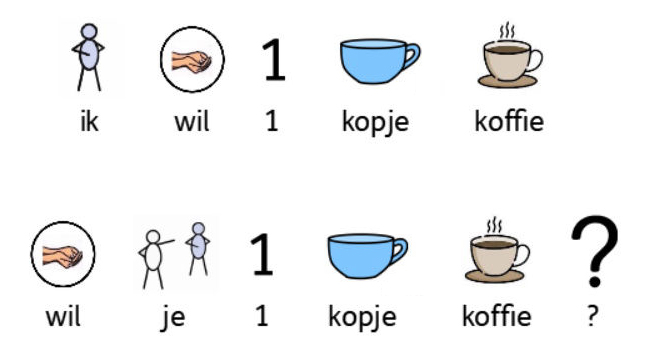
With the sentence "I want 1 cup of coffee", the sentence starts with the personal pronoun "I" followed by the verb. But if we transform this sentence into a question, the position of the verb and the personal pronoun switches. In the English language, a question starts with "do you want" or "would you like". In Dutch, just the personal pronoun and verb switch.
With an indication of place and an indication of time
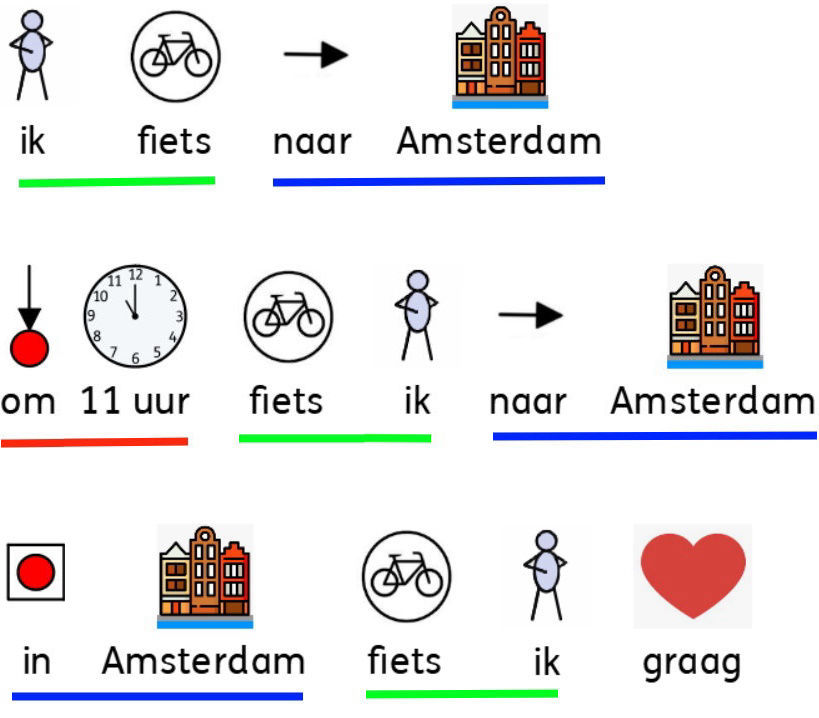
When we have the sentence "I cycle to Amsterdam" in Dutch ("Ik fiets naar Amsterdam"), the word order changes if an indication of place or time is given at the beginning of the sentence. In Dutch, then the personal pronoun and the verb change positions.
For example:
"At 11 o'clock, I cycle to Amsterdam" becomes "Om 11 uur fiets ik naar Amsterdam."
"In Amsterdam, I like to cycle" becomes "In Amsterdam fiets ik graag."
Another example
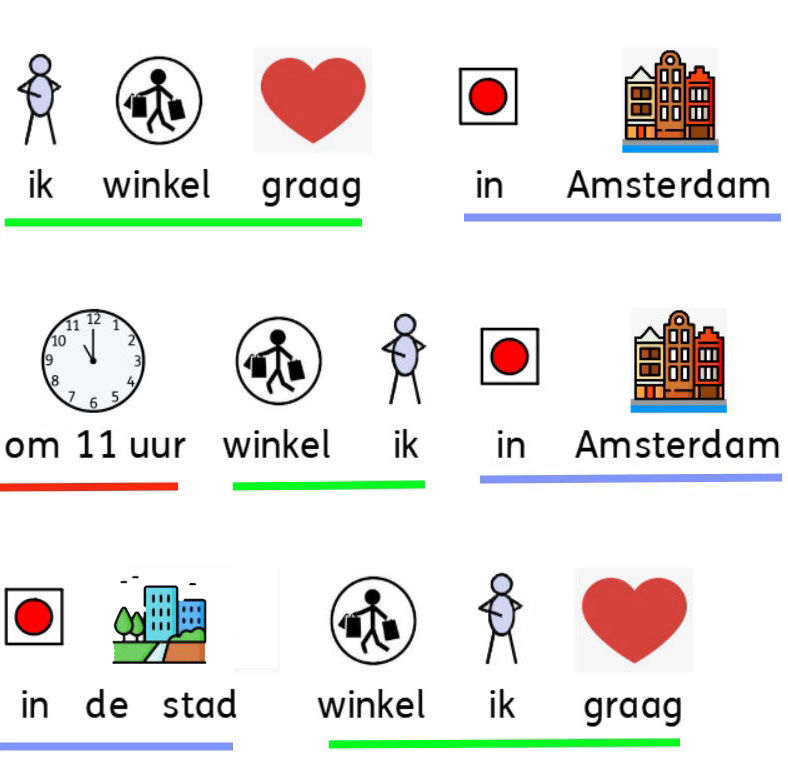
The following sentence consists of two parts:
first part: "I like to shop" which is literally translated into 1: I and 2: shop 3: like. So like comes after the verb to shop.
second part: in Amsterdam. The last part is clear. It consists of a preposition ("in") and the actual place.
Once a time indication is placed at the beginning of the sentence, the verb and the personal pronoun change positions.
The last example
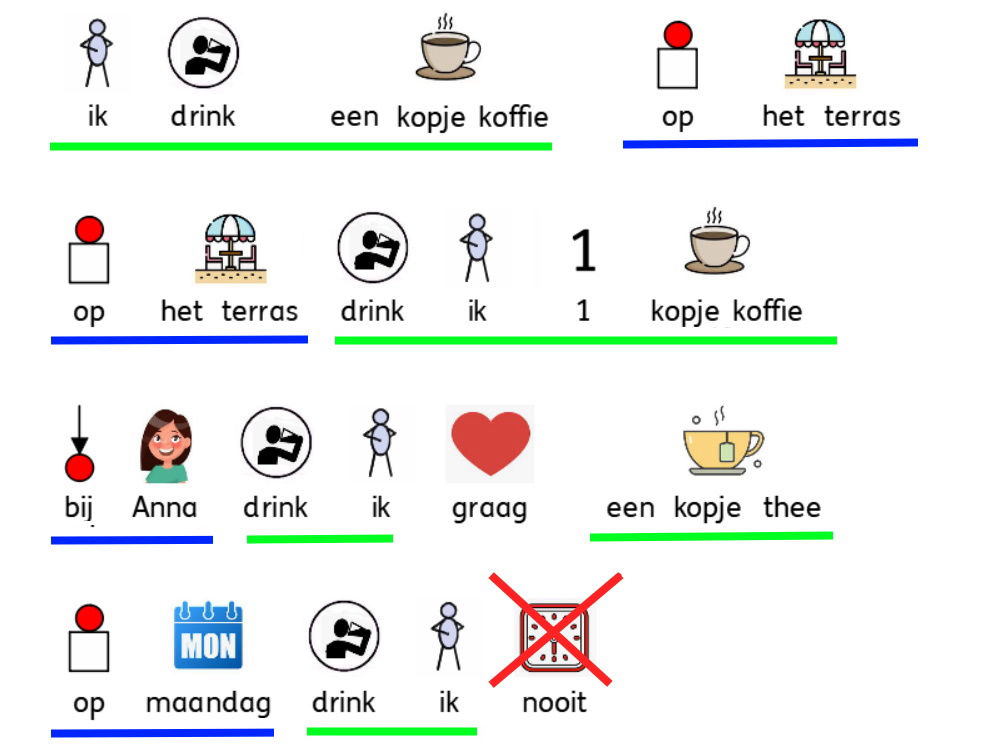
The last examples show different parts and by means of colors you can see the order of these parts. Again, if a special situation is indicated at the start of the sentence, the personal pronoun and the verb change positions.
Check your understanding
Say or write your answer first. Then open the answer to check.