← Chapter 1 overview

CHAPTER 1

Lesson 1 · Introduce yourself

Ask a name, introduce yourself and ask how someone is.

Listen and meet someone

Watch two people meeting. Listen for how they ask and say their names.

Practise one useful question and answer at a time. Pause the video when you want to repeat a phrase.

Choosing a polite form

Dutch has different ways to say “you”. Choose the form that fits the situation.

For one person, je and jij are informal; jij is usually more emphatic. U is formal or polite. You can start with u in a formal situation and follow the other person’s preference. For more than one person, use jullie.

Listen to the three forms below. Use je or jij in an informal conversation; u is a polite choice in a formal conversation.

1: je

2: jij

3: U 

Name

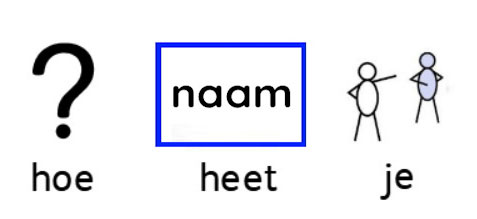
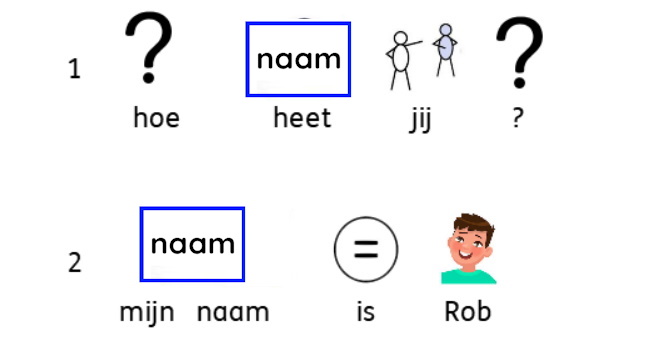
The Dutch word for “name” is naam. The picture below represents a name.

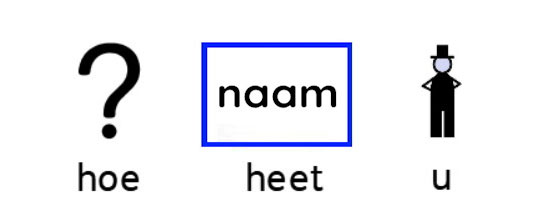
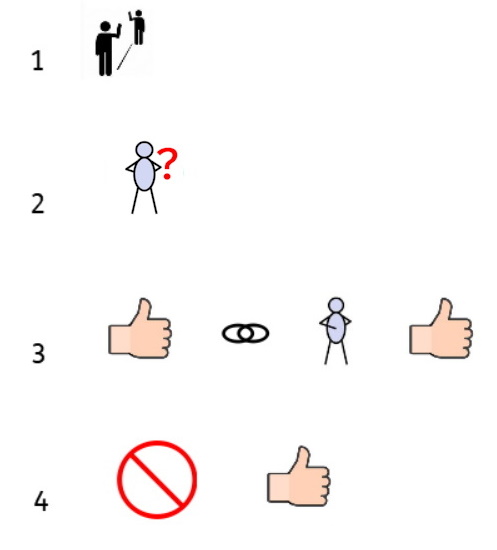
Ask Hoe heet je? in an informal conversation, or Hoe heet u? in a polite conversation. Both mean “What is your name?”

Here you see the familiar form:

Here you see the polite form:

Asking how someone feels

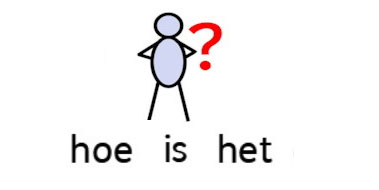
You know that a person in our illustration language is indicated by this simple symbol:

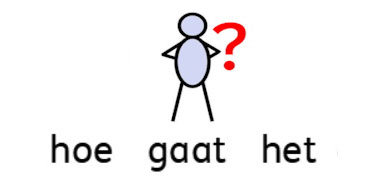
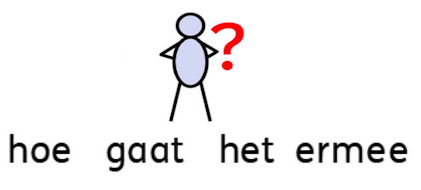
Ask how someone is feeling. The person with a question mark represents this question in the pictures.

There are several ways for asking the same question "how are you". Here you see three ways

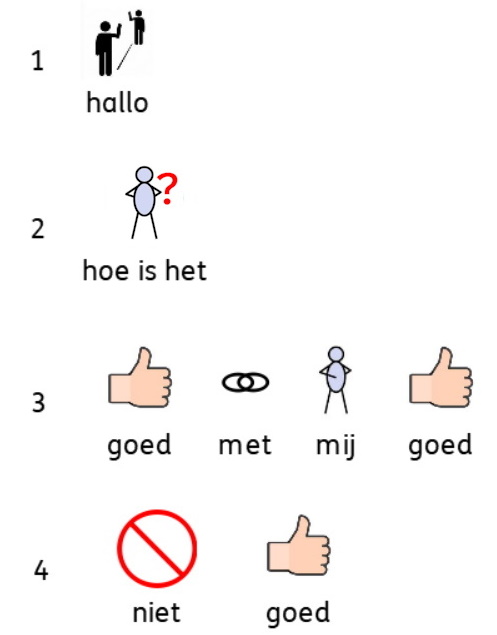
More greetings

1 hello

2 how are you?   

3 good        I'm fine

4 not good

The word "is"

The Dutch verb zijn means “to be”. Learn the forms in short phrases: ik ben (I am), jij bent (you are), hij is (he is) and wij zijn (we are). The equals sign in a circle represents this verb.

Rob my neighbor

Here is my neighbor, a young guy. I started by asking for his name. Here is our first small conversation.

1 what is your name? (familiar)

3 my name is Rob

The answer starts with mijn naam — “my name”. Practise the answer with your own name.

I was curious...

I noticed that he was good in English. I asked him where he came from:

where do you come from?

how old are you?

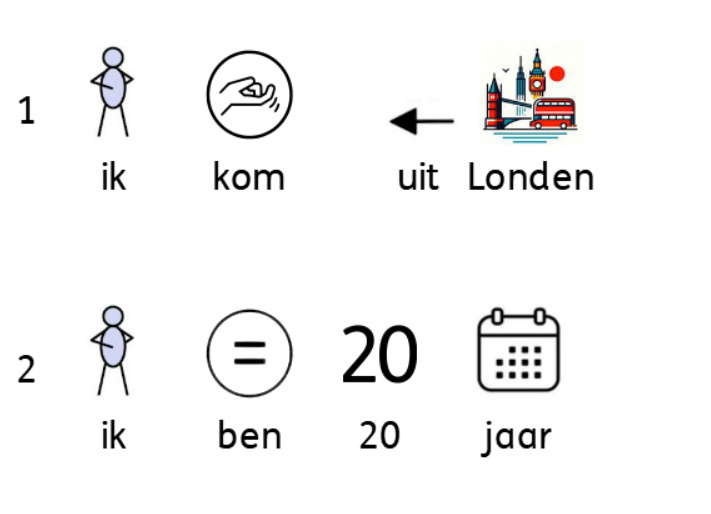
This was his answer

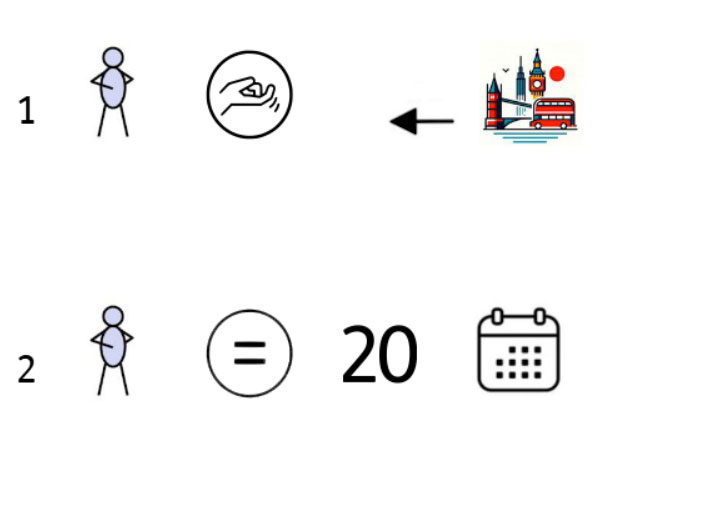
1 I come from London

2 I am 20 years (old)

More complete sentences

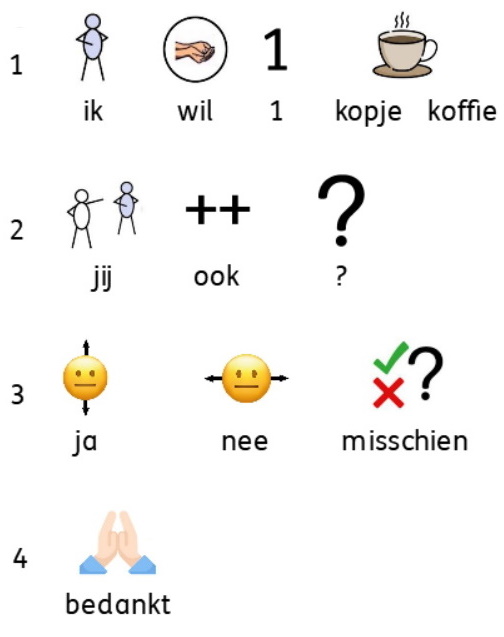
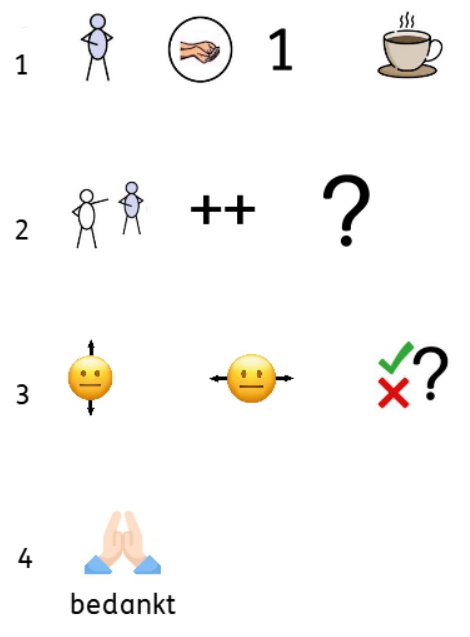
Listen to the short conversation below. Follow the pictures from left to right, then repeat each phrase.

1 I want 1 cup of coffee

2 you also?      

3 yes     no    perhaps

4 thanks

Your turn: say it, then listen

1. Hello

2. How are you?

3. Good / I’m fine

4. Not good

1. I come from London

2. I am 20 years (old)

1. I want 1 cup of coffee

2. You also?

3. Yes no perhaps

4. Thanks

A movie

Watch the portraits and listen to the Dutch expressions. To speak about the present, use:

I am ... 

To speak about the past, use:

I was...

Portraits

Understand the video

The portraits help you practise talking about people. Listen for these two expressions:

Ik ben …

I am …

Use this to introduce yourself or say something about yourself now.

Ik ben Anna. — I am Anna.

Ik was …

I was …

Use this to talk about yourself in the past.

Ik was leraar. — I was a teacher.

In a portrait exercise, imagine that the person in the picture is speaking. In everyday conversation, use ik for yourself.

Try it: pause the video and repeat the expression aloud. Then introduce yourself using Ik ben … and your own name.

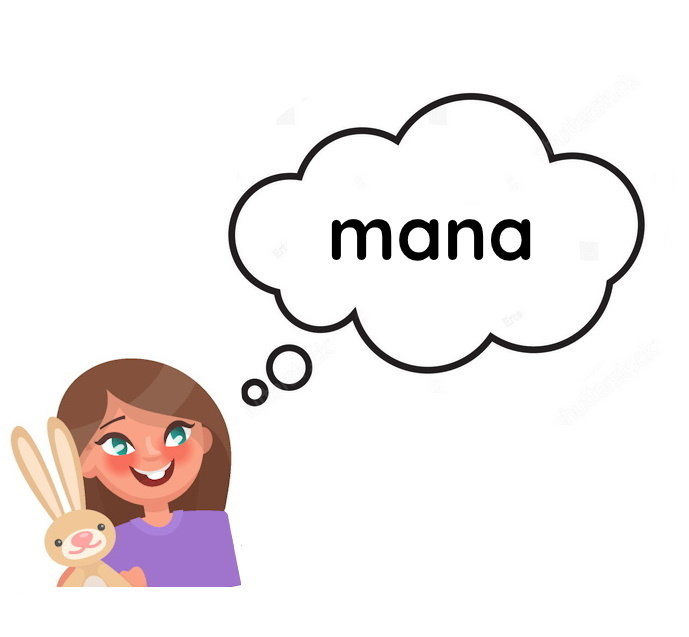
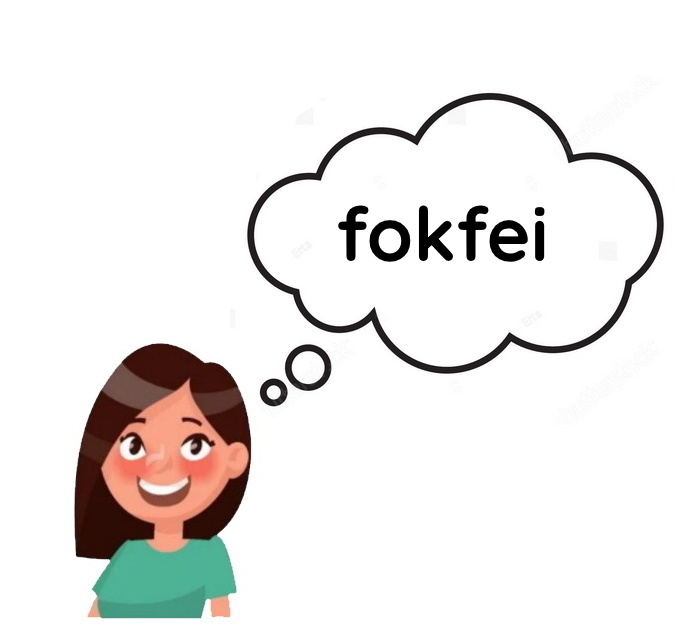
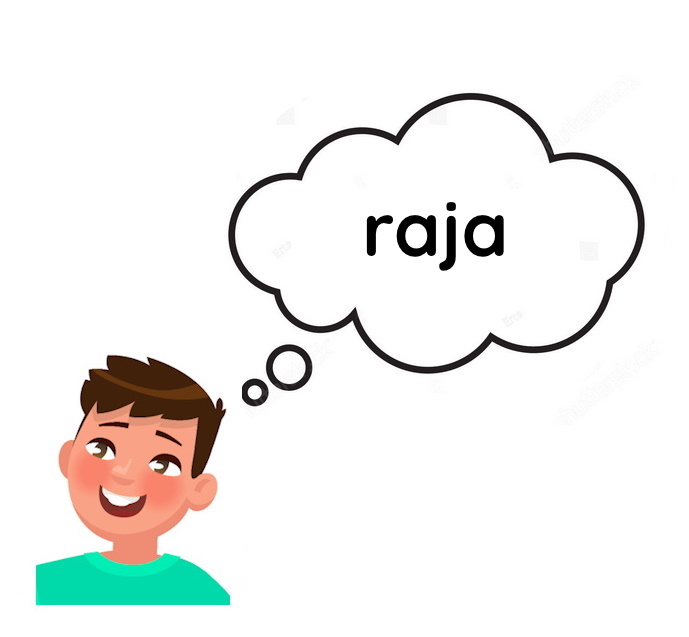
Unscramble the word
Answers

raja

jaar

mana

naam

fokfei

koffie