Introduction · People, sounds & everyday life
Build on your first Dutch words. Learn to talk about people, describe the world around you and understand more of what you hear.
Start lesson 8 →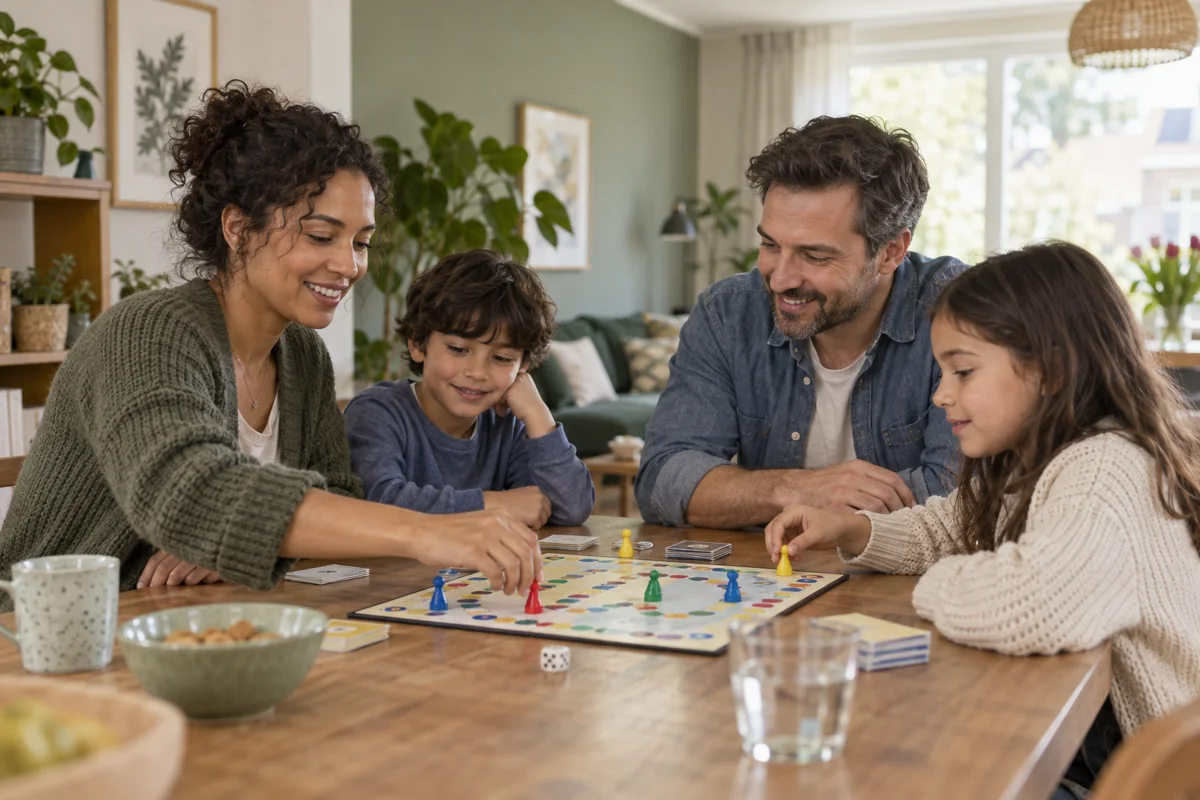
What will you learn?
People and activities
Talk about family, say what someone enjoys and use personal pronouns in simple sentences.
Sounds and sentences
Listen for differences between Dutch sounds. Repeat short words and build sentences with pictures.
The world around you
Describe positions and colours, count, tell the time and talk about seeing, hearing and smelling.
Families are different
People may live alone, with a partner, children, relatives or housemates. Use the family examples to learn useful words, then practise talking about your own situation.
Met wie woon je?
Who do you live with?
Wat doen jullie graag samen?
What do you enjoy doing together?
Your own example
Think of a person you know and an activity they enjoy. You can also invent a person for your practice.
Four pronunciation lessons, one step at a time
Lessons 10–13 focus on Dutch sounds. You do not need to learn them all in one session. Choose a few examples and repeat them before moving on.
- 01ListenHear the complete word first.
- 02NoticeListen for the sound being practised.
- 03RepeatPause and say the word aloud.
- 04ComparePlay it again and listen to the difference.
- 05ReturnPractise the same words another day.
Aim to be understood. You can ask a teacher, volunteer or learning partner to listen and help you.
Family life in art
This painting by Jan Steen shows a lively family scene. It offers a starting point for talking about people and activities. It does not show how every family lives today.
Look carefully: how many people can you see? What are they doing? Try naming a person or an object you already know in Dutch.
Practise as you go
Use the pictures
Look for the meaning before reading the answer. Say a short sentence about what you see.
Try the exercises
Exercises appear during the chapter and at the end. Check your answers and revisit examples you found difficult.
Repeat useful words
Return to recordings and flashcards. Try using colours, numbers and time in your everyday life.
Start with the people around you
The first lesson introduces family members and their favourite activities.