CHAPTER 3

Lesson 27 · More verbs

Explore the verbs

Choose a verb to see its forms and listen to the pronunciation.

View the original pictogram overviewOverview of Dutch verb pictograms

Other essential verbs

In addition to the verbs "to be" (zijn), "to have" (hebben), and "to want" (willen), there are several other essential verbs in Dutch that beginners should focus on. These verbs are crucial for everyday communication and form the foundation of many sentences. Here are some of the most important ones:

To do/make (doen/maken):
"Doen" and "maken" are both important for expressing actions and creating things. For example, "I do my homework" (Ik doe mijn huiswerk) and "I make dinner" (Ik maak het avondeten).

To go (gaan):
"Gaan" is essential for talking about movement and travel. For example, "I go to school" (Ik ga naar school).

To come (komen):
"Komen" is used to talk about arriving or coming to a place. For example, "I come home" (Ik kom thuis).

To see (zien):
"Zien" is used for visual perception. For example, "I see a bird" (Ik zie een vogel).

To know (weten/kennen):
"Weten" is used for factual knowledge, while "kennen" is used for familiarity with people or places. For example, "I know the answer" (Ik weet het antwoord) and "I know her" (Ik ken haar).

To say (zeggen):
"Zeggen" is essential for speaking and communicating. For example, "I say hello" (Ik zeg hallo).

To think (denken):
"Denken" is used to express thoughts and opinions. For example, "I think it's good" (Ik denk dat het goed is).

To feel (voelen):
"Voelen" is important for expressing physical and emotional states. For example, "I feel happy" (Ik voel me blij).

To like (houden van):
"Houden van" is used to express likes and preferences. For example, "I like chocolate" (Ik hou van chocola).

To need (moeten/nodig hebben):
"Moeten" is used for necessity or obligation, and "nodig hebben" is used for needing something. For example, "I need to go" (Ik moet gaan) and "I need help" (Ik heb hulp nodig).

Focusing on these verbs will provide a solid foundation for beginners, enabling them to form a wide variety of sentences and communicate effectively in Dutch.
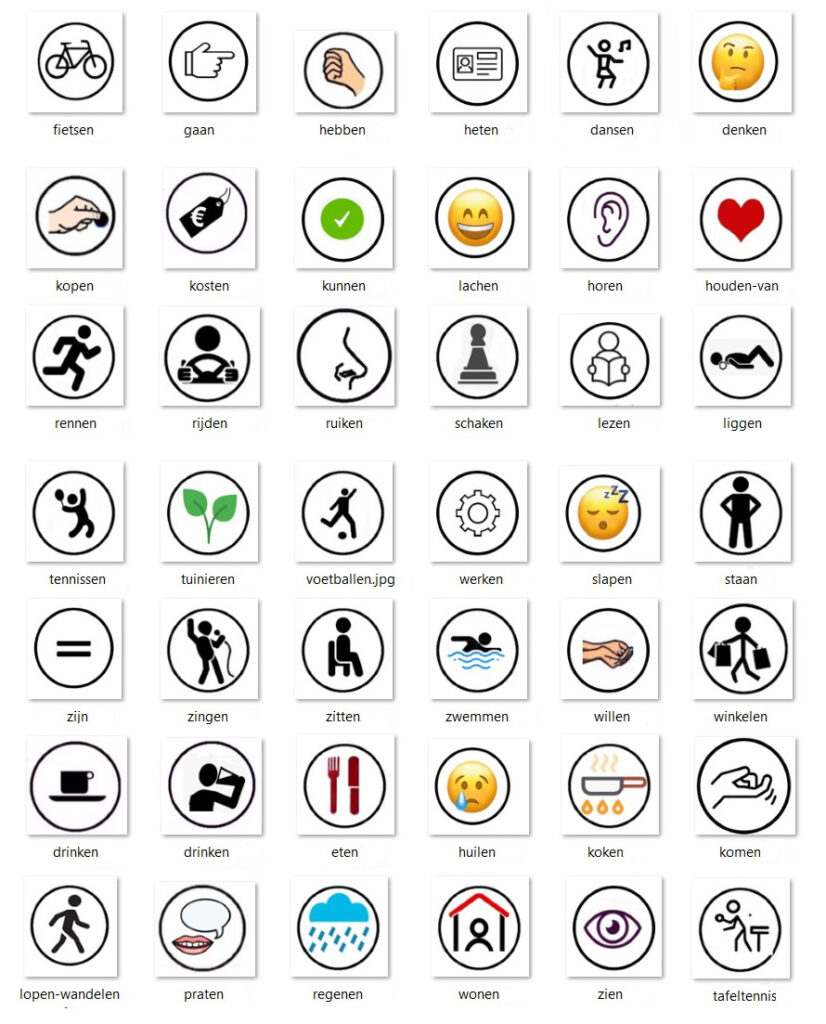
Listen and practise: 32 verbs

denken

to think

ikdenkI think
jijdenktyou think
hij / zijdenkthe/she thinks
wij / jullie / zijdenkenwe/you/they think
Listen and repeat

dansen

to dance

ikdansI dance
jijdanstyou dance
hij / zijdansthe/she dances
wij / jullie / zijdansenwe/you/they dance
Listen and repeat

fietsen

to cycle

ikfietsI cycle
jijfietstyou cycle
hij / zijfietsthe/she cycles
wij / jullie / zijfietsenwe/you/they cycle
Listen and repeat

gaan

to go

ikgaI go
jijgatyou go
hij / zijgathe/she goes
wij / jullie / zijgaanwe/you/they go
Listen and repeat

heten

to be called

ikheetmy name is
jijheetyour name is
hij / zijheethe/she is called
wij / jullie / zijhetenwe/you/they are called
Listen and repeat

lachen

to laugh

iklachI laugh
jijlachtyou laugh
hij / zijlachthe/she laughs
wij / jullie / zijlachenwe/you/they laugh
Listen and repeat

horen

to hear

ikhoorI hear
jijhoortyou hear
hij / zijhoorthe/she hears
wij / jullie / zijhorenwe/you/they hear
Listen and repeat

hebben

to have

ikhebI have
jijhebtyou have
hij / zijheefthe/she has
wij / jullie / zijhebbenwe/you/they have
Listen and repeat

houden van

to love

ikhoud vanI love
jijhoudt vanyou love
hij / zijhoudt vanhe/she loves
wij / jullie / zijhouden vanwe/you/they love
Listen and repeat

rennen

to run

ikrenI run
jijrentyou run
hij / zijrenthe/she runs
wij / jullie / zijrennenwe/you/they run
Listen and repeat

rijden

to drive

ikrijdI drive
jijrijdtyou drive
hij / zijrijdthe/she drives
wij / jullie / zijrijdenwe/you/they drive
Listen and repeat

ruiken

to smell

ikruikI smell
jijruiktyou smell
hij / zijruikthe/she smells
wij / jullie / zijruikenwe/you/they smell
Listen and repeat

tennissen

to play tennis

iktennisI play tennis
jijtennistyou play tennis
hij / zijtennisthe/she plays tennis
wij / jullie / zijtennissenwe/you/they play tennis
Listen and repeat

lezen

to read

ikleesI read
jijleestyou read
hij / zijleesthe/she reads
wij / jullie / zijlezenwe/you/they read
Listen and repeat

liggen

to lie

ikligI lie
jijligtyou lie
hij / zijligthe/she lies
wij / jullie / zijliggenwe/you/they lie
Listen and repeat

staan

to stand

ikstaI stand
jijstatyou stand
hij / zijstathe/she stands
wij / jullie / zijstaanwe/you/they stand
Listen and repeat

zitten

to sit

ikzitI sit
jijzityou sit
hij / zijzithe/she sits
wij / jullie / zijzittenwe/you/they sit
Listen and repeat

zingen

to sing

ikzingI sing
jijzingtyou sing
hij / zijzingthe/she sings
wij / jullie / zijzingenwe/you/they sing
Listen and repeat

slapen

to sleep

ikslaapI sleep
jijslaaptyou sleep
hij / zijslaapthe/she sleeps
wij / jullie / zijslapenwe/you/they sleep
Listen and repeat

werken

to work

ikwerkI work
jijwerktyou work
hij / zijwerkthe/she works
wij / jullie / zijwerkenwe/you/they work
Listen and repeat

voetballen

to play football

ikvoetbalI play football
jijvoetbaltyou play football
hij / zijvoetbalthe/she plays football
wij / jullie / zijvoetballenwe/you/they play football
Listen and repeat

drinken

to drink

ikdrinkI drink
jijdrinktyou drink
hij / zijdrinkthe/she drinks
wij / jullie / zijdrinkenwe/you/they drink
Listen and repeat

winkelen

to shop

ikwinkelI shop
jijwinkeltyou shop
hij / zijwinkelthe/she shops
wij / jullie / zijwinkelenwe/you/they shop
Listen and repeat

zwemmen

to swim

ikzwemI swim
jijzwemtyou swim
hij / zijzwemthe/she swims
wij / jullie / zijzwemmenwe/you/they swim
Listen and repeat

komen

to come

ikkomI come
jijkomtyou come
hij / zijkomthe/she comes
wij / jullie / zijkomenwe/you/they come
Listen and repeat

koken

to cook

ikkookI cook
jijkooktyou cook
hij / zijkookthe/she cooks
wij / jullie / zijkokenwe/you/they cook
Listen and repeat

huilen

to cry

ikhuilI cry
jijhuiltyou cry
hij / zijhuilthe/she cries
wij / jullie / zijhuilenwe/you/they cry
Listen and repeat

eten

to eat

ikeetI eat
jijeetyou eat
hij / zijeethe/she eats
wij / jullie / zijetenwe/you/they eat
Listen and repeat

lopen

to walk

ikloopI walk
jijlooptyou walk
hij / zijloopthe/she walks
wij / jullie / zijlopenwe/you/they walk
Listen and repeat

praten

to talk

ikpraatI talk
jijpraatyou talk
hij / zijpraathe/she talks
wij / jullie / zijpratenwe/you/they talk
Listen and repeat

zien

to see

ikzieI see
jijzietyou see
hij / zijziethe/she sees
wij / jullie / zijzienwe/you/they see
Listen and repeat

zijn

to be

ikbenI am
jijbentyou are
hij / zijishe/she is
wij / jullie / zijzijnwe/you/they are
Listen and repeat