CHAPTER 4
Lesson 38 · Describing something
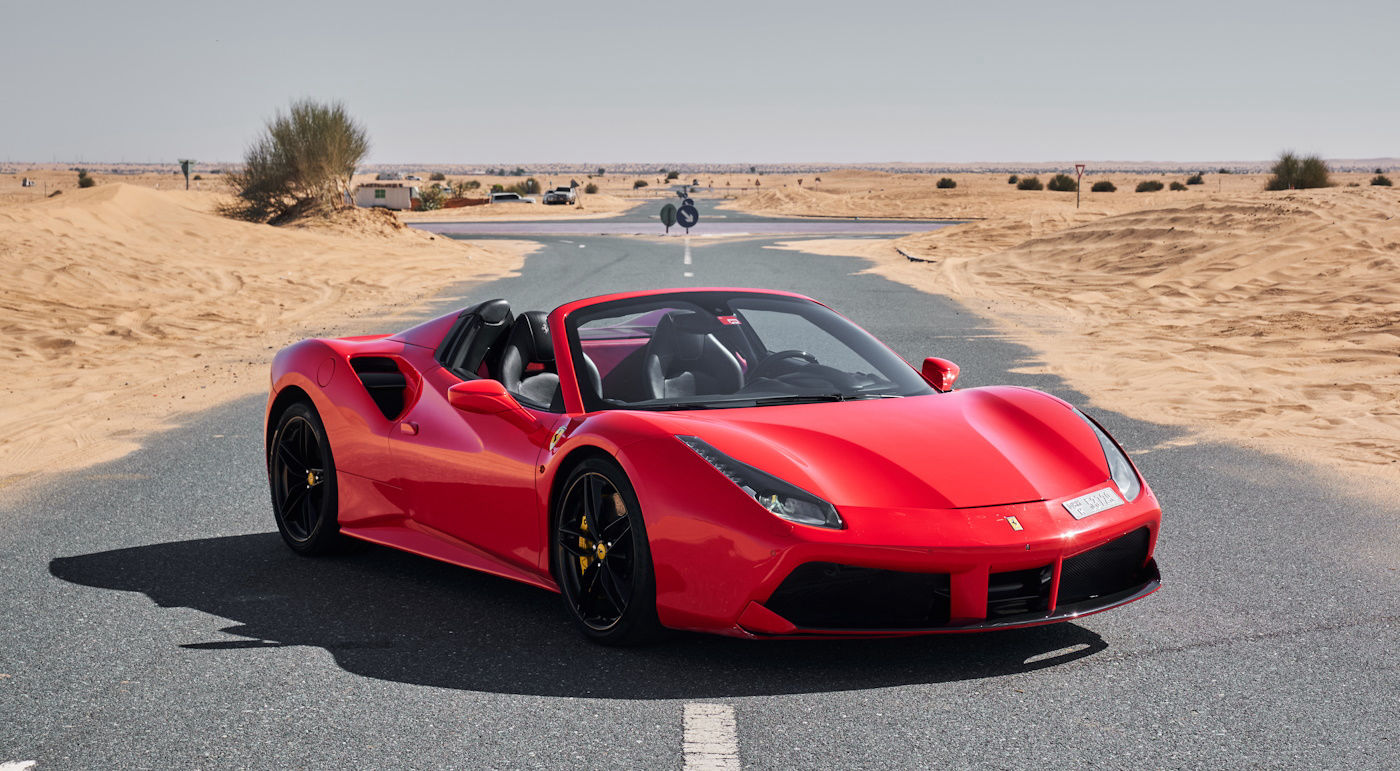
Describing characteristics

We have placed this section before the next section. This next section is about shopping and shopping always involves a number of typical terms such as: less, more, enough. Of course, sentences such as: this is too expensive, that is cheap and where can I pay, also occur. But when choosing, we always feel the need to be able to describe more. This section shows how we can say more about "a thing" and more about a verb.
Adjectives, telling more about "things"
Adjectives are words that describe nouns. They give us more information about the objects, people, places, or things we talk about. You can think of adjectives as little helpers that add color, size, shape, or other qualities to nouns.
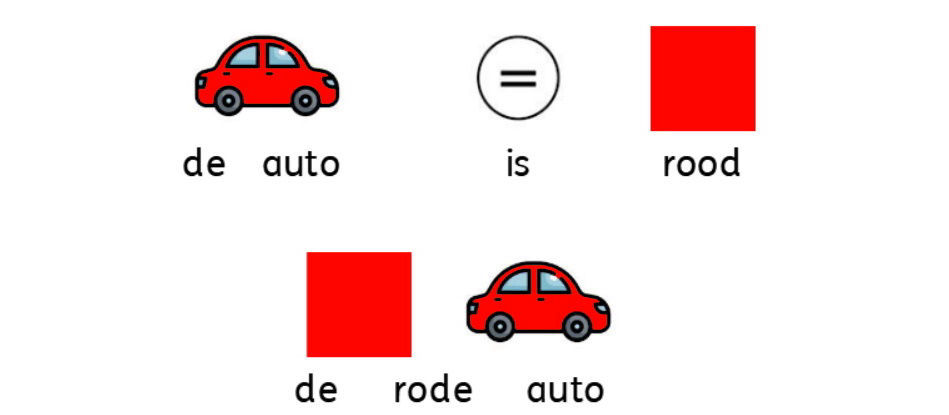
Let's use a simple example with a car. Look at the picture
First sentence: the car is red.
In this sentence, "red" describes the color of the car. The adjective "red" comes after the verb "is" and gives us more details about the car.
Second sentence: the red car.
Here, "red" is directly before "car", describing the car’s color right away. This shows the adjective "red" working right next to the noun "car" to tell us what kind of car it is.
In both cases, the adjective "red" provides information about the noun "car", helping us picture a red car instead of just any car.
More examples
1. the house is big / the big house
2. the boat is small / the small boat
3. the dress is beautiful / the beautiful dress
4. the pants are ugly / the ugly pants
5. the girl is nice / the nice girl
6. the boy is bad / the bad boy
7. the water is warm / the warm water
8. the water is cold / the cold water
Adverbs: describing an action
For an introduction about adverbs the following sentence is used:
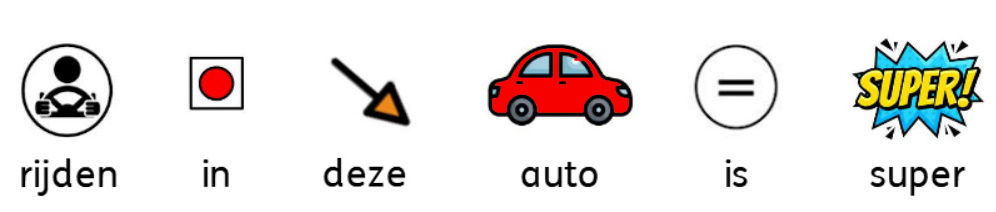
Compare De auto is snel. — The car is fast — and Hij rijdt snel. — He drives fast. In the first example, snel describes the car; in the second, it describes how he drives.
In Zij is blij. and Zij voelt zich blij., blij describes the person. Describing a feeling does not automatically make a word an adverb.
Difference between adjectives and adverbs
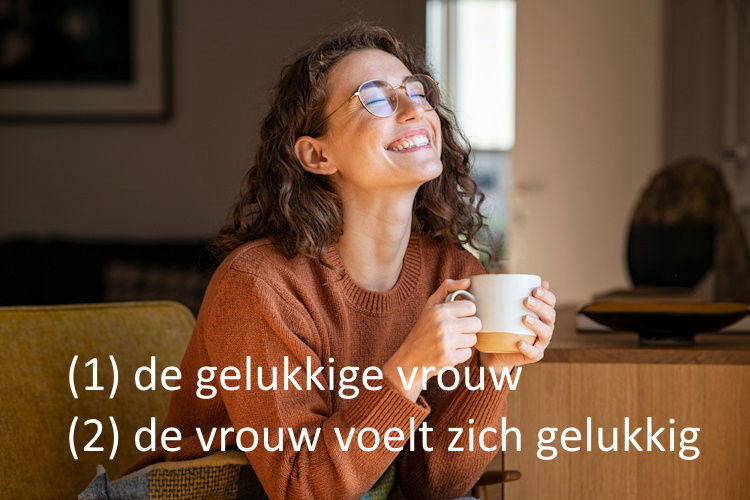
An adjective describes a person or thing: een blije vrouw — a happy woman. An adverb can describe an action: Zij praat rustig. — She speaks calmly. Dutch often uses the same word form for these different functions.
Here are a few examples. Of course, you have to learn these words!
- 1goedgoodslechtbad
- 2blijhappyverdrietigsad
- 3grootbigkleinsmall
- 4snelfastlangzaamslow
- 5heethotkoudcold
- 6jongyoungoudold
- 7lichtlight (weight)zwaarheavy
- 8gemakkelijkeasymoeilijkdifficult
- 1rijkricharmpoor
- 2sterkstrongzwakweak
- 3aardigkindonaardigunkind
- 4schooncleanviesdirty
- 5slimcleverdomstupid
- 6goedkoopcheapduurexpensive
- 7vroegearlylaatlate
- 8breedwidesmalnarrow
- 1mooibeautifullelijkugly
- 2zachtsofthardhard
- 3volfullleegempty
- 4gezondhealthyongezondunhealthy
- 5eerlijkhonest / faironeerlijkdishonest / unfair
- 6laaglowhooghigh
- 7stilquietlawaaierignoisy
- 8veiligsafeonveiligunsafe
When to add -e to a word that characterizes a noun (=adjective)
Before a noun, many adjectives take -e: de zwarte auto, het kleine huis, een zwarte auto. With an indefinite singular het noun, there is usually no -e: een klein huis, geen klein huis. Plurals normally take -e: kleine huizen.
After a linking verb, use the basic adjective: De auto is zwart. Compare deze zwarte auto and deze auto is zwart. There are exceptions, for example material adjectives ending in -en: een houten tafel.
Colours
More adjectives
The highlighted ending is -e. Sometimes the spelling changes too, as in wit → witte and groot → grote. Not every adjective changes: oranje stays the same.
Check your understanding
Say or write your answer first. Then open the answer to check.