CHAPTER 4
Lesson 40 · So called helping verbs

Auxiliary verbs (or helping verbs) are verbs used in combination with another verb. First, we will provide some examples.
The Dutch verb "kunnen"
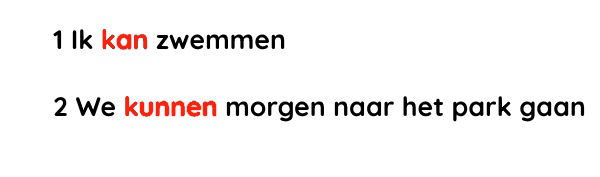
This verb means you are able to do something.
Examples:
1: I can swim.
2: We can go to the park tomorrow.
The Dutch verb "mogen"

This verb means you have permission to do something.
Examples:
1: You may not smoke here.
2: May I have a piece of cake?
The Dutch verb "moeten"
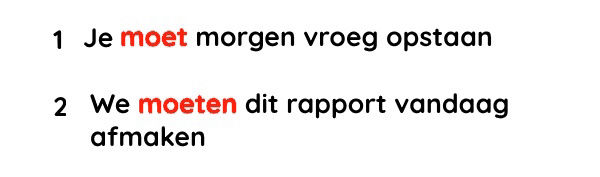
This verb means you have to do something.
Examples:
1: You have to get up early tomorrow.
2: We must finish this report today.
The Dutch verb "willen"
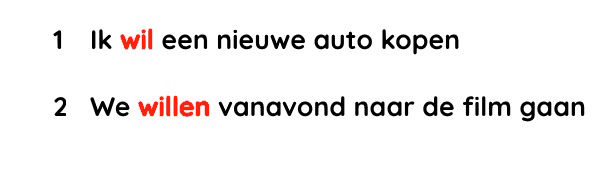
This verb means you want to do something.
Examples:
1: I want to buy a new car.
2: we want to go to the cinema tonight.
The Dutch verb "zullen"
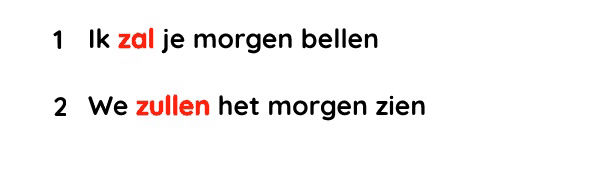
This verb is used to talk about the future or to make a suggestion.
Examples:
1: I will call you tomorrow.
2: We will see it tomorrow.
The Dutch verbs "hebben" and "zijn"
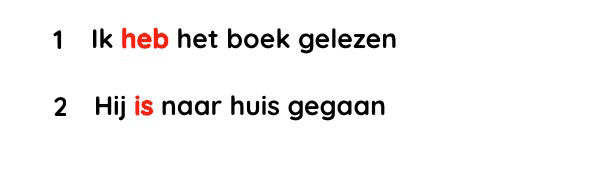
Hebben and zijn help form perfect tenses. Compare Ik las het boek. — I read the book — with Ik heb het boek gelezen. — I have read the book. A simple past form does not need an auxiliary.
Example with "hebben":
1: I have read the book.
Example with "zijn":
2: He has gone home.
A quick survey
Why use these special verbs?
Possibility: They show if something can happen (Dutch: kunnen).
Permission: They show if something is allowed (Dutch: mogen).
Necessity: They show if something must be done (Dutch: moeten).
Desire: They show if someone wants to do something (Dutch: willen).
Future: They talk about things that will happen (Dutch: zullen).
Past: They show that something has already happened (Dutch: hebben and zijn).
These verbs are important in Dutch because they make sentences clearer and more specific.
Finally we offer a table with the conjugations.
Helping verbs: the right form for each person
Choose the person at the top. Then read down to find the verb form.
On a small screen, tap a person to see their verb forms.
| Tense | ik | jij u | hij zij het | wij jullie zij |
|---|---|---|---|---|
| kunnen | ||||
| Present | kan | kunt | kan | kunnen |
| Past | kon | kon | kon | konden |
| Perfect | heb gekund | hebt gekund | heeft gekund | hebben gekund |
| mogen | ||||
| Present | mag | mag | mag | mogen |
| Past | mocht | mocht | mocht | mochten |
| Perfect | heb gemogen | hebt gemogen | heeft gemogen | hebben gemogen |
| moeten | ||||
| Present | moet | moet | moet | moeten |
| Past | moest | moest | moest | moesten |
| Perfect | heb gemoeten | hebt gemoeten | heeft gemoeten | hebben gemoeten |
| willen | ||||
| Present | wil | wilt | wil | willen |
| Past | wilde | wilde | wilde | wilden |
| Perfect | heb gewild | hebt gewild | heeft gewild | hebben gewild |
| zullen | ||||
| Present | zal | zult | zal | zullen |
| Past | zou | zou | zou | zouden |
Choose a person to see the matching verb forms.
kunnen
- Present
- kan
- Past
- kon
- Perfect
- heb gekund
mogen
- Present
- mag
- Past
- mocht
- Perfect
- heb gemogen
moeten
- Present
- moet
- Past
- moest
- Perfect
- heb gemoeten
willen
- Present
- wil
- Past
- wilde
- Perfect
- heb gewild
zullen
- Present
- zal
- Past
- zou
kunnen
- Present
- kunt
- Past
- kon
- Perfect
- hebt gekund
mogen
- Present
- mag
- Past
- mocht
- Perfect
- hebt gemogen
moeten
- Present
- moet
- Past
- moest
- Perfect
- hebt gemoeten
willen
- Present
- wilt
- Past
- wilde
- Perfect
- hebt gewild
zullen
- Present
- zult
- Past
- zou
kunnen
- Present
- kan
- Past
- kon
- Perfect
- heeft gekund
mogen
- Present
- mag
- Past
- mocht
- Perfect
- heeft gemogen
moeten
- Present
- moet
- Past
- moest
- Perfect
- heeft gemoeten
willen
- Present
- wil
- Past
- wilde
- Perfect
- heeft gewild
zullen
- Present
- zal
- Past
- zou
kunnen
- Present
- kunnen
- Past
- konden
- Perfect
- hebben gekund
mogen
- Present
- mogen
- Past
- mochten
- Perfect
- hebben gemogen
moeten
- Present
- moeten
- Past
- moesten
- Perfect
- hebben gemoeten
willen
- Present
- willen
- Past
- wilden
- Perfect
- hebben gewild
zullen
- Present
- zullen
- Past
- zouden
Other correct forms: jij/u kan, jij/u wil, jij/u zal. With u, heeft is also correct. You may also hear wou / wouden instead of wilde / wilden.
With another verb: use Ik heb kunnen komen (I was able to come), rather than Ik heb gekund komen. The perfect forms in the table are used when no second verb follows, for example Ik heb dat nooit gewild. (I never wanted that.)
Zullen: this overview shows its present and past forms; there is no ordinary perfect form to learn here.