CHAPTER 3
Lesson 21 · Intro grammar

Verbs

This lesson focuses on verbs, which describe actions, such as to run or to swim, or states of being, as in "I am happy."
Introduction to Grammar
Our language coach recommended a brief introduction to grammar. Initially apprehensive because we disliked grammar, we felt reassured by his assurance that it would be straightforward. Here’s his introduction.
Different word orders
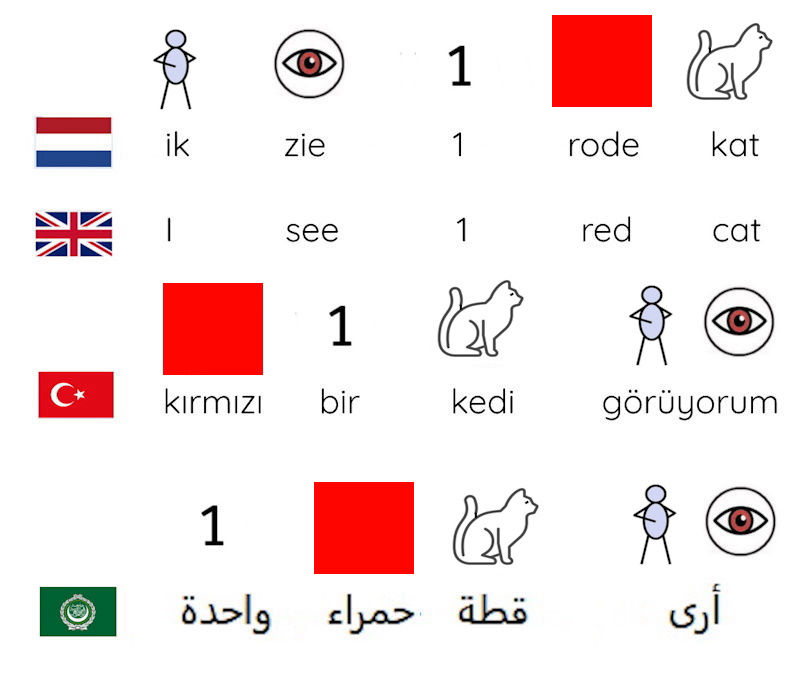
This example demonstrates the variability in word order across languages using the sentence "I see 1 red cat". The comparison shows the similarity between Dutch and English. In contrast, Turkish places the phrase equivalent to "I see" at the sentence's end, differing from both Dutch and English. Furthermore, in Turkish, the words equivalent to "I" and "see" are combined into a single word.
Then we see Arabic. Notice that Arabic is read from right to left.
I see 1 red cat
Nouns
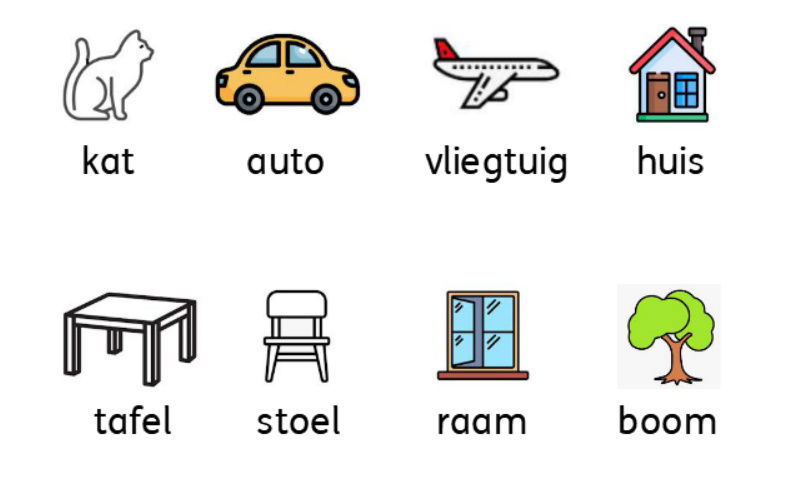
Nouns are words that refer to objects, places, ideas, and other "things". Here, we see several examples of nouns, making this concept easy to understand.
cat, car, airplane, house
table, chair, window, tree
Personal pronouns
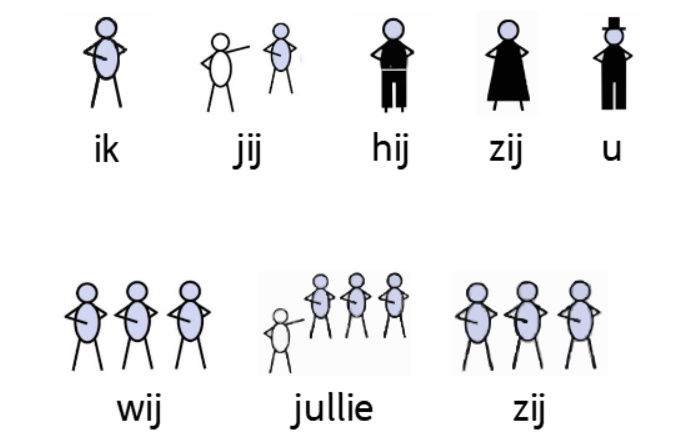
Personal pronouns are a separate group of words, not a type of noun. They can stand in place of a person or thing. Subject pronouns include ik, jij, hij, zij, het, wij, jullie and zij. The formal form of “you” is u.
I, you, he, she, you (polite)
we, you (plural), they
A warning

The rules of a particular language often show significant differences from those of other languages. Additionally, there can be important differences in the meaning of a word. If you are familiar with English (but it’s not your native language), you may know that the word "you" can have several equivalents in your own language. For example, in Dutch, we have both a familiar form and a polite form (as in most languages). The same applies to different verb forms associated with personal pronouns (known as conjugation). In some languages, this distinction does not exist.
This course was originally written in English, as it is a language understood by many. Sometimes, challenges arise when translating English to Dutch due to the difficulties mentioned above. Often, we will provide the Dutch sentence alongside the sentence in your language. However, this may mean that, in your language, you might not see these differences.
This makes it very important to also study how these rules apply in Dutch!
Verbs
Verbs indicate an action, or "something a person is doing". In our illustrative language, verbs are sometimes represented with a circle (though not always). In Dutch, the personal pronoun and the verb are always separate words. However, in some languages, such as Turkish, these two are combined into a single word.
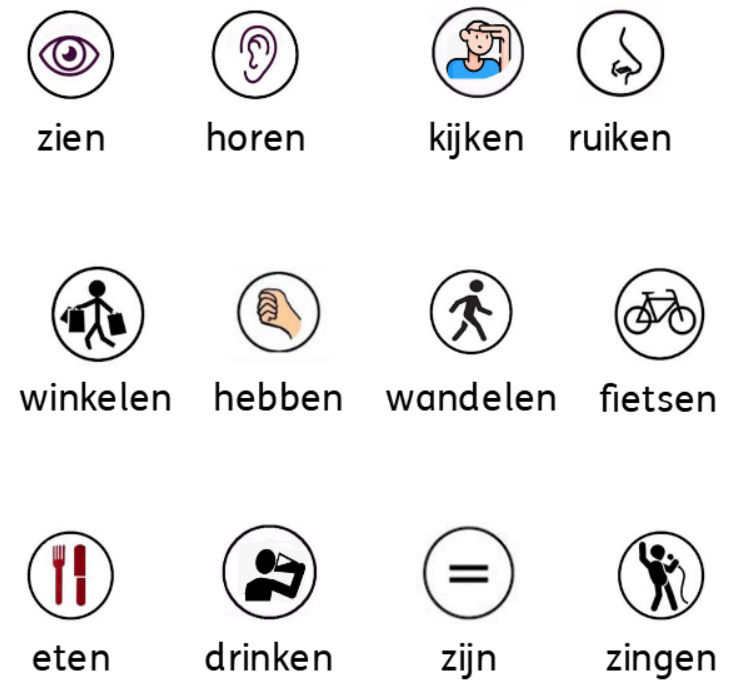
1 to see, to hear, to look, to smell
2 to shop, to have, to walk, to bike
3 to eat, to drink, to be, to sing
Verbs and time
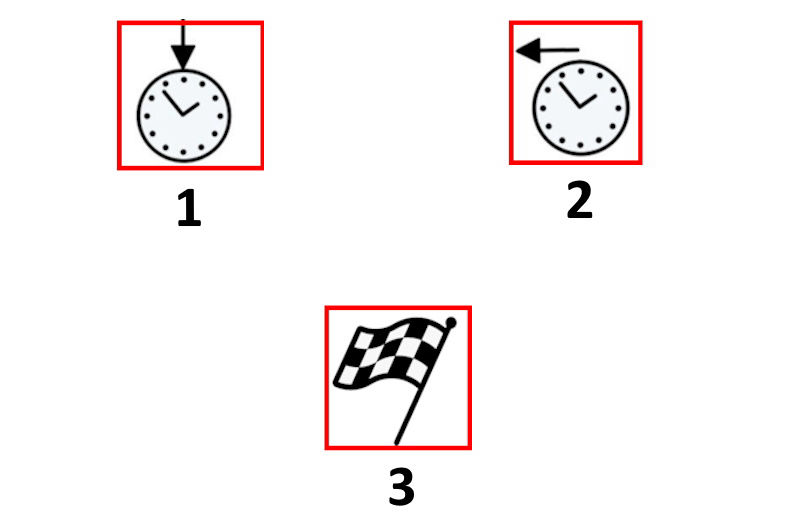
Ways of indicating time (1: actual time, 2: past time)
or that an action is finished (3)
Now (actual time) Then (past time)
In many languages, verb conjugation changes according to the personal pronoun and whether the action relates to:
- The present tense (now)
- The past tense (then)
- A special situation where the action is completed (perfect tense)
In these illustrations, symbol 1 represents the present tense. The other symbols distinguish the past and the perfect tense. In real sentences, the verb form and context tell you the tense.
Symbol 2 placed before the verb marks the past tense.
With symbol 3 before the verb, it signifies that the action is completed. In this case, the verb to be or to have combines with the main verb.
Now, let’s demonstrate this.
The action is finished

Our language coach said that to learn Dutch, the next part is essential. He even said that this in fact is the first series of words to study how verbs are spelled in combination with words like I, you, he, etc.
So there is only one conclusion... we had to do it. But, you will see. It is quite easy!
Verbs in relation to personal pronouns
Compare the three forms: Ik loop in Amsterdam. (I walk in Amsterdam), Ik liep in Amsterdam. (I walked in Amsterdam) and Ik heb in Amsterdam gelopen. (I have walked in Amsterdam). Changing the verb form is called conjugation. The finish flag marks the perfect tense in these pictures.
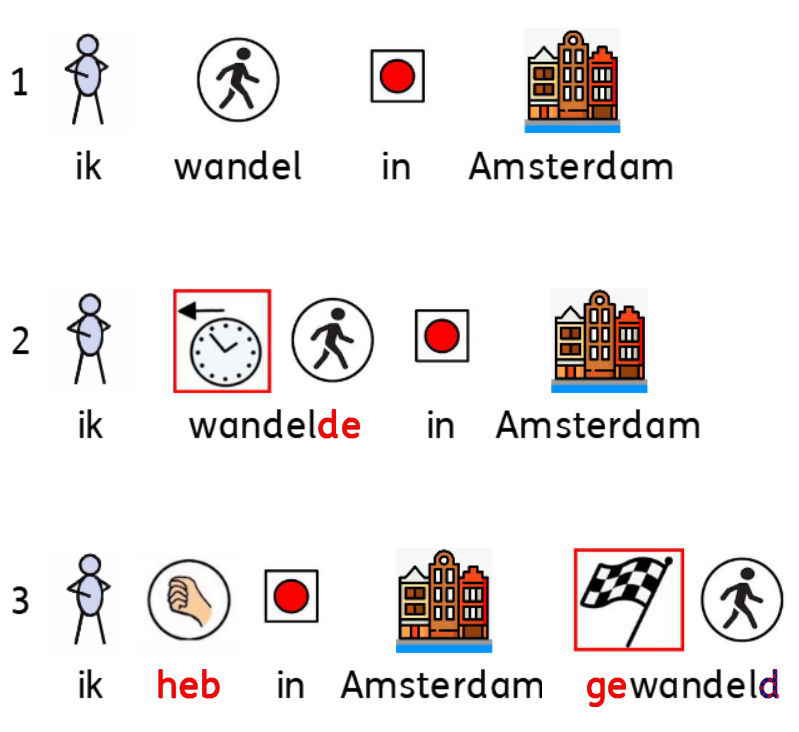
1 I walk in Amsterdam
2 I walked in Amsterdam
3 I have walked in Amsterdam
Warning:
The original course is written in English, and with some languages there is no difference between 2 and 3. So it can be that in your language you see the same sentence, whereas in Dutch you see a different sentence!
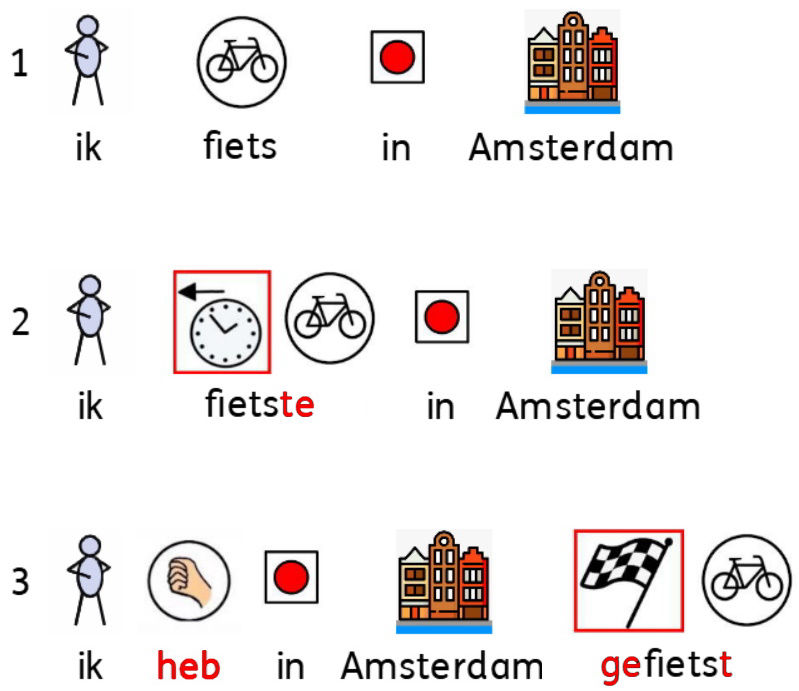
Cycle (1)
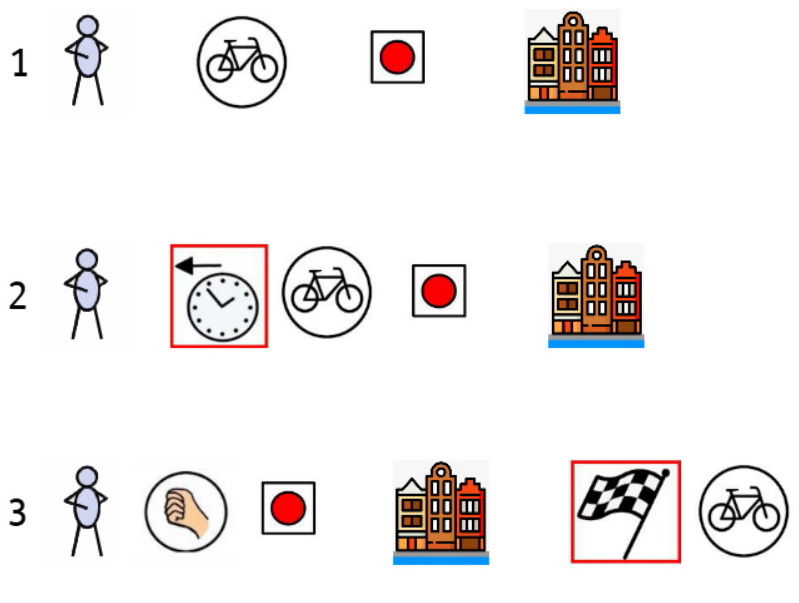
Another example 1 I cycle in Amsterdam
2 I cycled in Amsterdam
3 I have cycled in Amsterdam
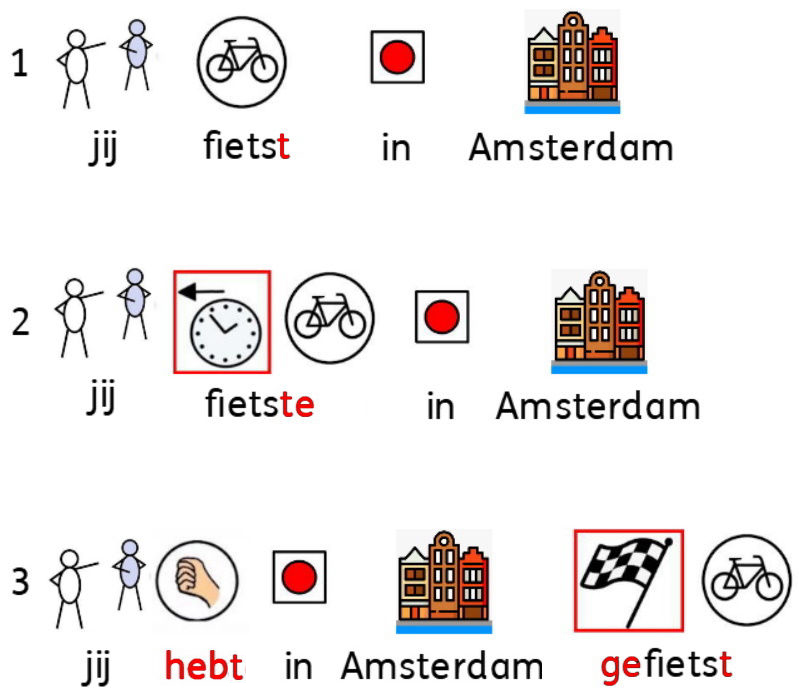
Cycle (2)
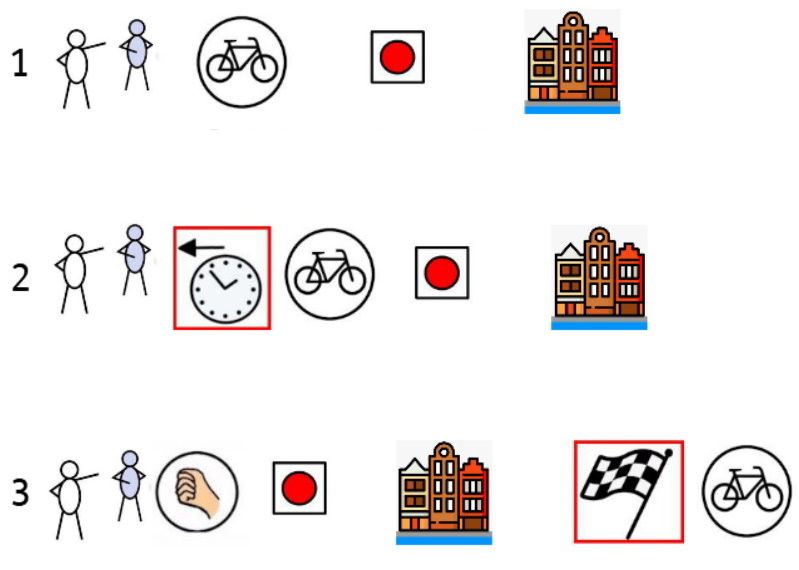
1 you cycle in Amsterdam
2 you cycled in Amsterdam
3 you have cycled in Amsterdam
Regular and irregular verbs
The change in a verb's spelling is known as “conjugation”. Verbs are divided into different categories:
- Regular verbs: These follow strict rules.
- Irregular verbs: Some forms differ from the regular pattern. Learn these forms with examples.
Tests
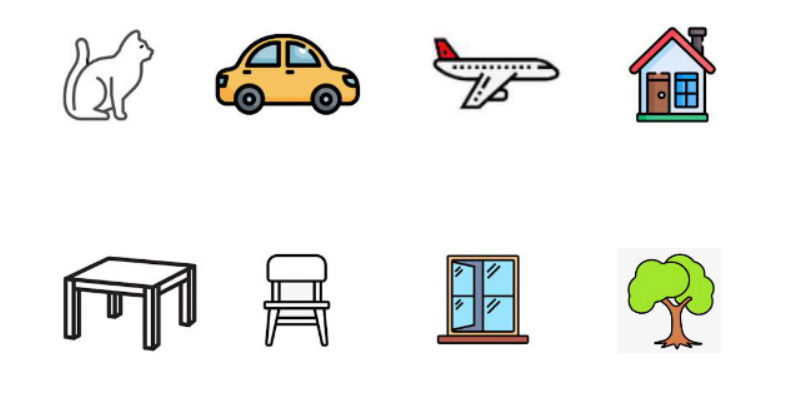
Cat, car, airplane, house
Table, chair, window, tree
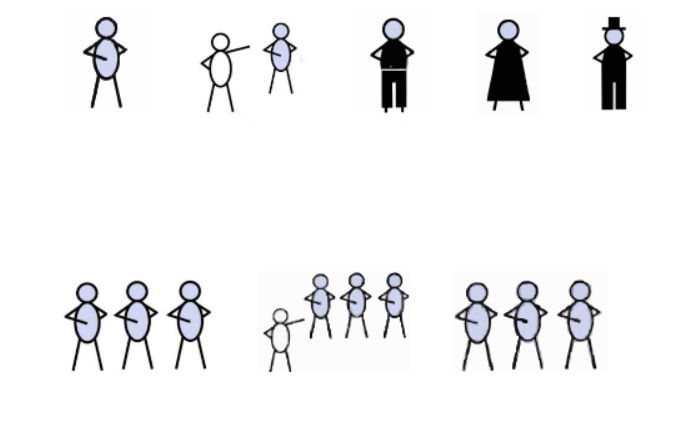
I, you, he, she, you (polite)
We, you (plural), they
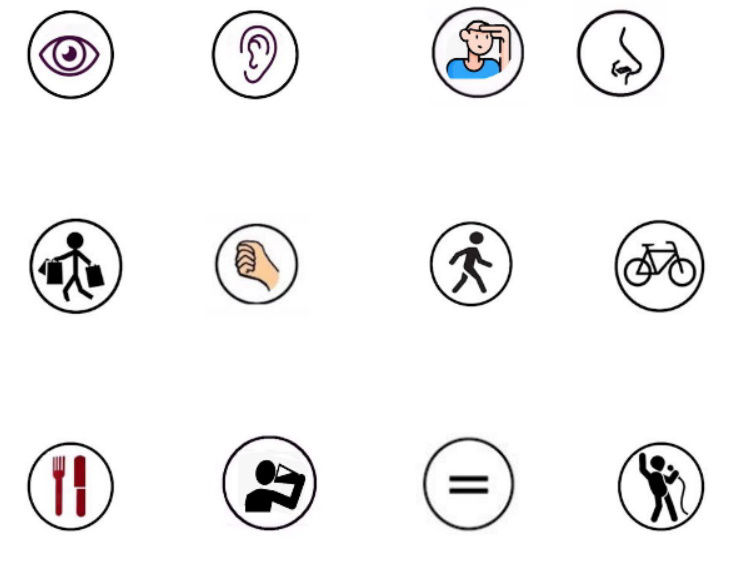
1. To see, to hear, to look, to smell
2. To shop, to have, to walk, to bike
3. To eat, to drink, to be, to sing
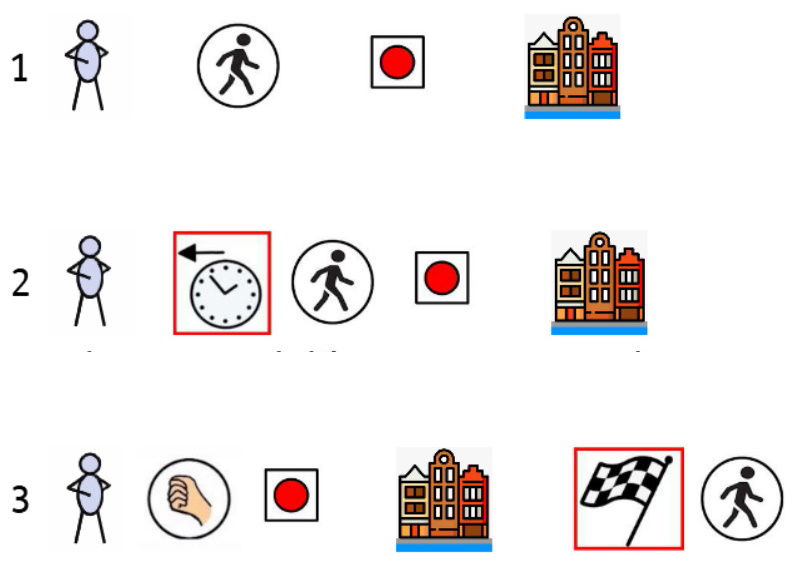
1. I walk in Amsterdam
2. I walked in Amsterdam
3. I have walked in Amsterdam
1. I cycle in Amsterdam
2. I cycled in Amsterdam
3. I have cycled in Amsterdam
1. You cycle in Amsterdam
2. You cycled in Amsterdam
3. You have cycled in Amsterdam