CHAPTER 3
Lesson 30 · "het" and "de"
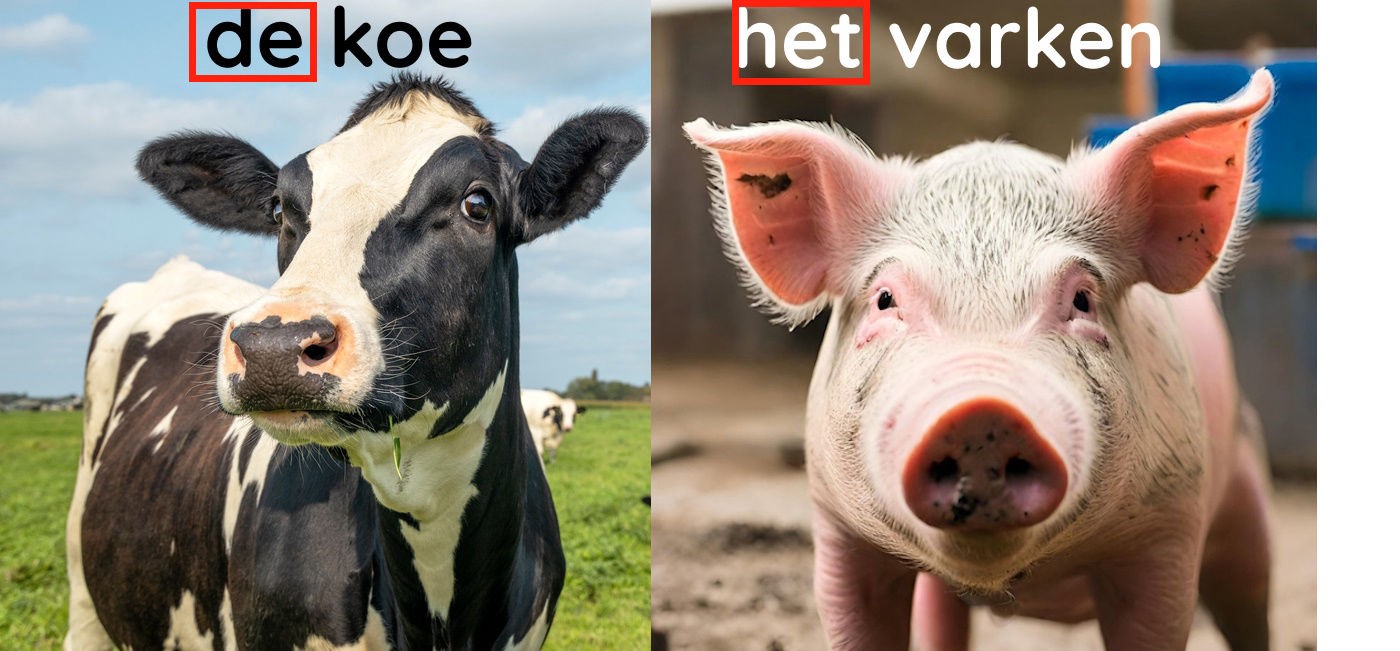
The word "the" indicates we are dealing with a certain cow or pig, otherwise, we use the word "a". However, in Dutch, we have two possibilities for "the" as you can see in the picture above: "de" or "het". The word "a" (a cow, a pig) is in Dutch always "een".
Hardly any rules:
If we are dealing with a single subject, it can be a "het"-word or a "de"-word. This makes Dutch a more difficult language compared to, for instance, English. If we are dealing with a plural, we are always dealing with "de".
About the words "het" and "de"
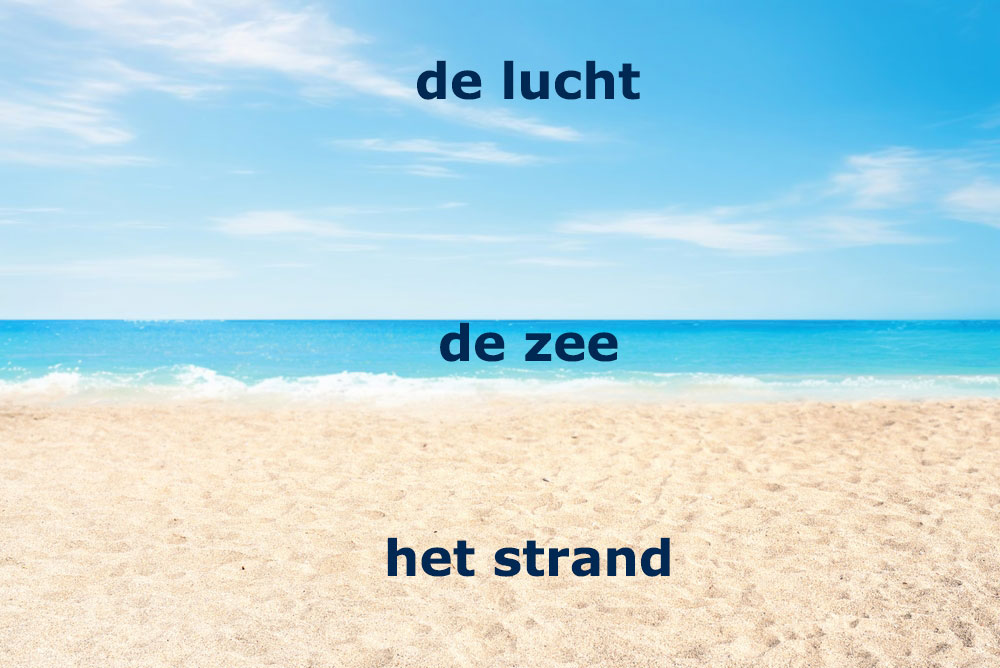
the air, the sea, the beach
The distinction between the words "het" and "de" in Dutch, as opposed to the single "the" in English, is an important point of Dutch grammar. Here's a more detailed look at how these words are used in Dutch:
"de" and "het": Take for instance:
the air, the sea and the beach
de lucht, de zee en het strand
"De" words

the books
Learn the article with each singular noun. Some common de words are de man, de vrouw, de hond and de kat, but people and animals do not always take de: het kind, het paard. All plural nouns take de: de kinderen, de boeken.
Endings can help, but they are not all reliable rules. Words ending in -heid generally take de. Words ending in -schap can take either article: de vriendschap, het landschap.
"Het" words
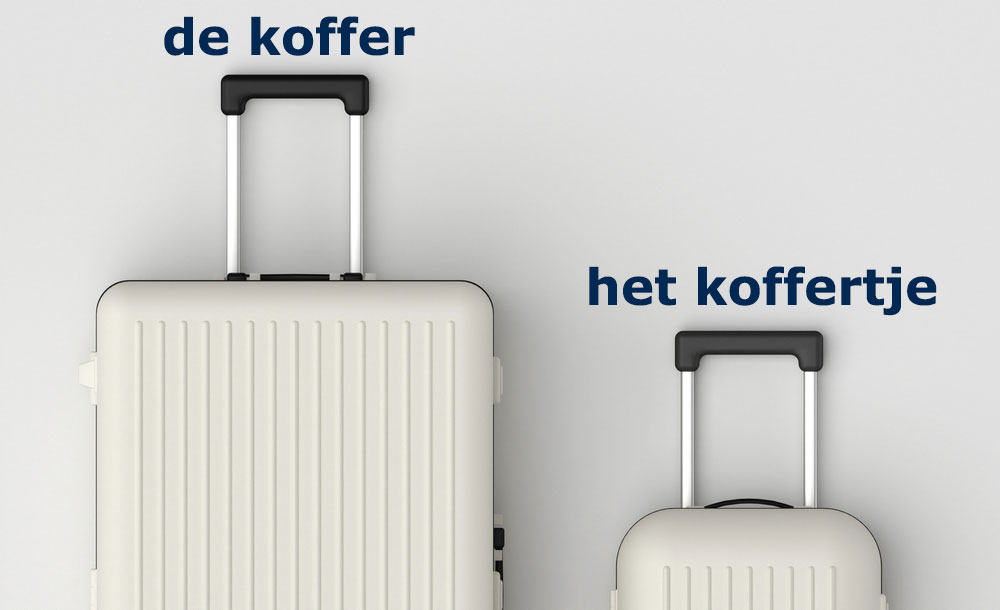
the suitcase, the little suitcase
Some common het words are het huis, het boek, het leven and het weer. Singular diminutives use het: het huisje, het hondje, het meisje. Their plurals use de: de huisjes, de meisjes.
Demonstrative pronouns

In Dutch, the choice of demonstrative pronouns depends on whether the noun is a "de"-word or a "het"-word. These words are used to indicate "this" or "that".
1. "Deze" and "die" (for "de"-words)
- "Deze" means "this" and is used with "de"-words to refer to something nearby.
- "Die" means "that" and is used with "de"-words to refer to something further away.
Examples:
- "de tafel" (the table) → "deze tafel" (this table), "die tafel" (that table)
- "de auto" (the car) → "deze auto" (this car), "die auto" (that car)
2. "Dit" and "dat" (for "het"-words)
- "Dit" means "this" and is used with "het"-words to refer to something nearby.
- "Dat" means "that" and is used with "het"-words to refer to something further away.
Examples:
- "het boek" (the book) → "dit boek" (this book), "dat boek" (that book)
- "het huis" (the house) → "dit huis" (this house), "dat huis" (that house)
3. Quick reference
- "De"-words: Use "deze" (this) and "die" (that).
- "Het"-words: Use "dit" (this) and "dat" (that).
4. Examples in sentences
- "Deze stoel is nieuw" (This chair is new) – "de"-word
- "Die auto is snel" (That car is fast) – "de"-word
- "Dit boek is interessant" (This book is interesting) – "het"-word
- "Dat huis is groot" (That house is big) – "het"-word
Learning which demonstrative pronoun to use with "de" and "het" words helps you express proximity and distance clearly in Dutch.
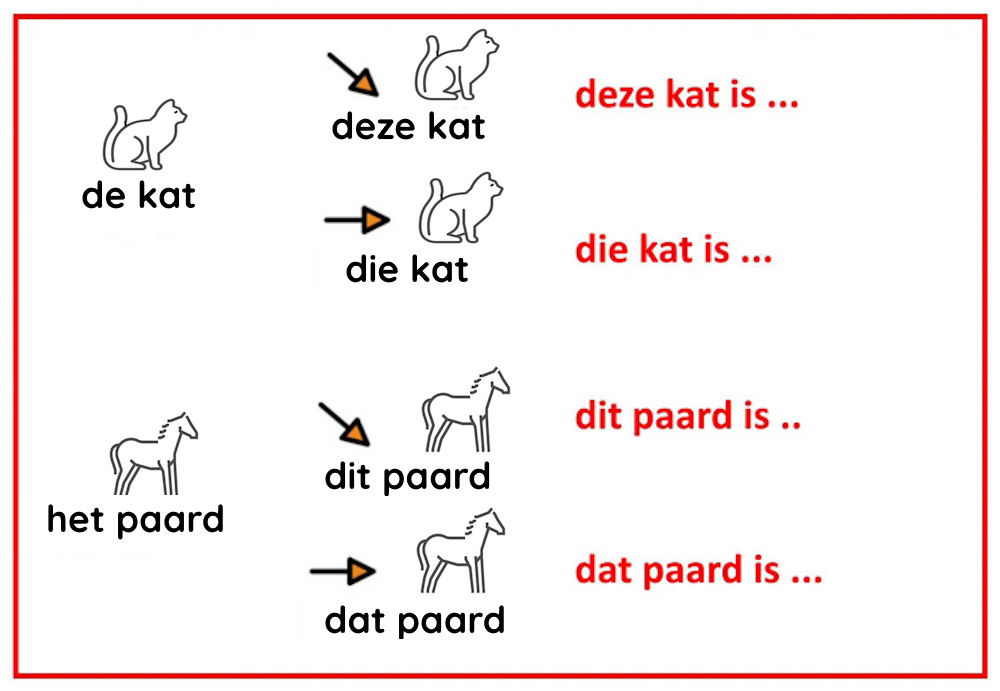
This illustration shows the different forms again. Notice how the words that indicate "which cat or which horse?" depend on the fact if we are dealing with an "de"-word like with cat (de kat), or a "het-woord" like with horse (het paard).
Examples
Check your understanding
Say or write your answer first. Then open the answer to check.