CHAPTER 2
Lesson 14 · Personal pronouns
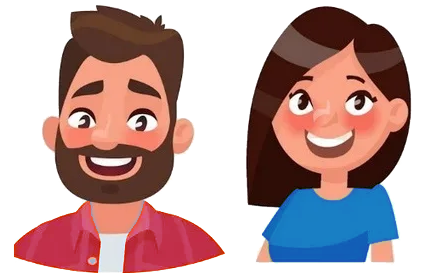
Words like I, you, he, she
Words like I, you, he, she, etc. are very important. These words have a specific name. These words are the so-called personal pronouns. In the following sentences we first present these words and then we present them in combination with the verb "to be".
Familiar and polite form
Notice that there is a polite form that can be used to indicate a person or a group (symbol: a person with a hat).
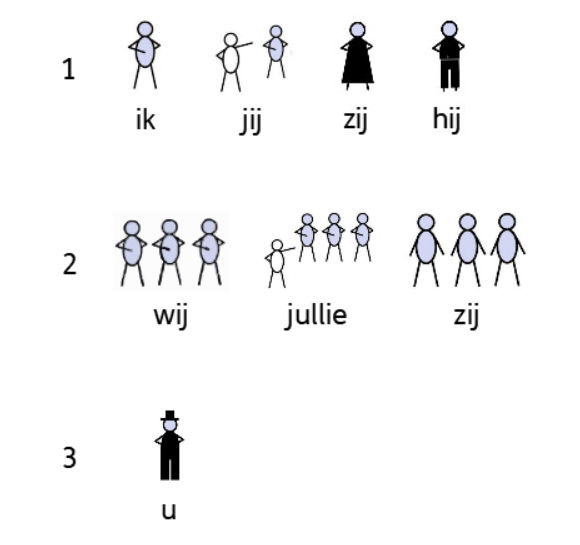
1 I, you, she, he
2 we, you, they
3 you (polite)
Since the original text of the course is written in English, which only has "you", whereas the Dutch language has both "u" (formal) and "jij" (informal), the translated text may lead to confusion. Therefore, carefully check if "(polite)" is indicated in brackets and listen to the Dutch pronunciation.
Now, we use personal pronouns in complete, simple sentences.
Again, we see the symbols for "also" represented by "++" and "and" by "+".
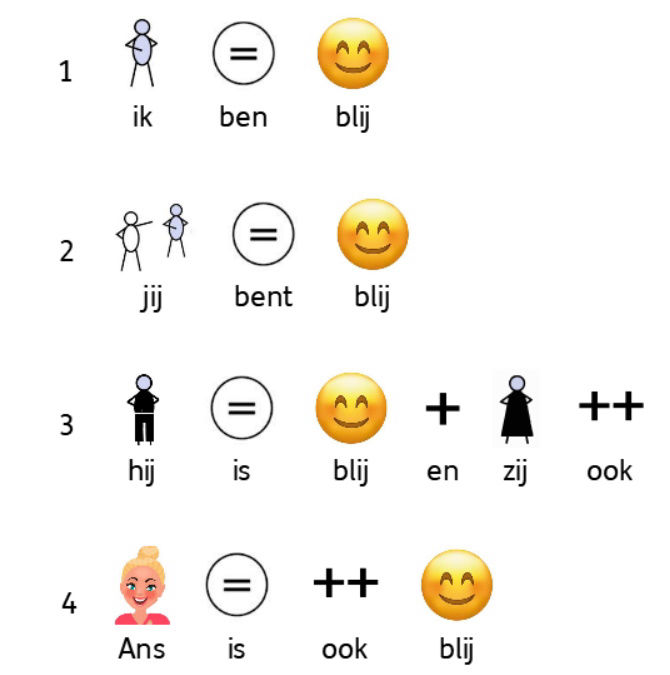
1 I am happy
2 you are happy
3 he is happy and she also
4 Ans is also happy
The Dutch language has two ways to indicate "you".
With family and people you know well, you use "jij" or "je".
Then, as we mentioned before, there is also the polite form "u", represented by an icon of a person with a hat. You use it, for example, in formal interactions.
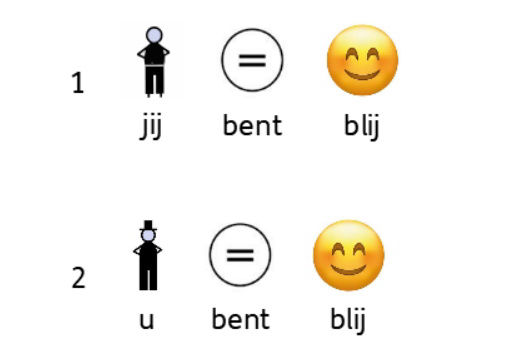
1 you are happy
2 you (polite) are happy
The personal pronouns when more persons are involved (plural)
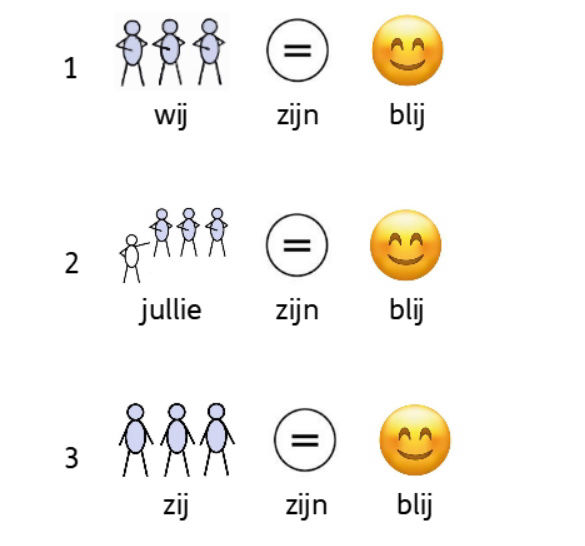
1 we are happy
2 you (all) are happy
3 they are happy
Now with a question

Notice that with a question the word order changes. Now the sentence starts with the verb "zijn" (from the verb "to be").
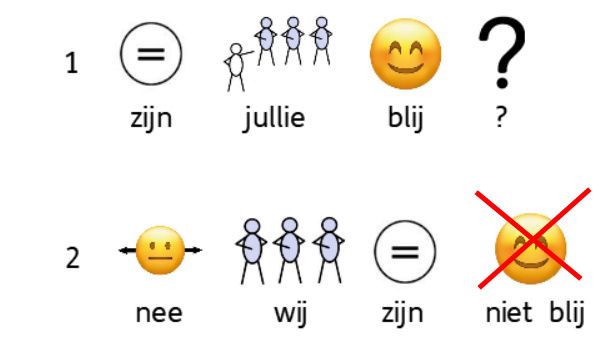
1 are you (all) glad?
2 no, we are not glad
Notice that with this denial (sentence 2), first the word "nee" is used and finally we see "niet". The combination "niet blij" means "not happy". We will meet this construction many times.
Test
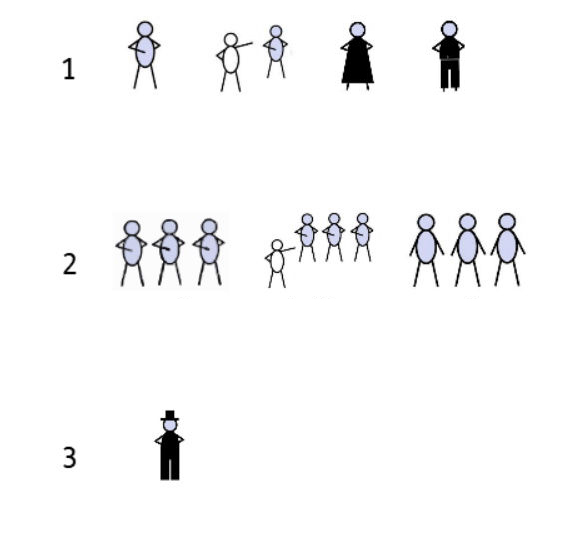
1. I, you, she, he
2. We, you, they
3. You (polite)
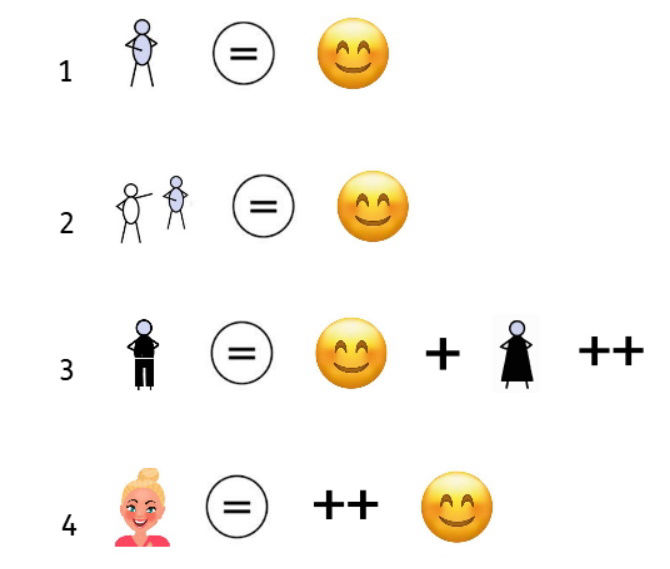
1. I am happy
2. You are happy
3. He is happy, and so is she
4. Ans is also happy
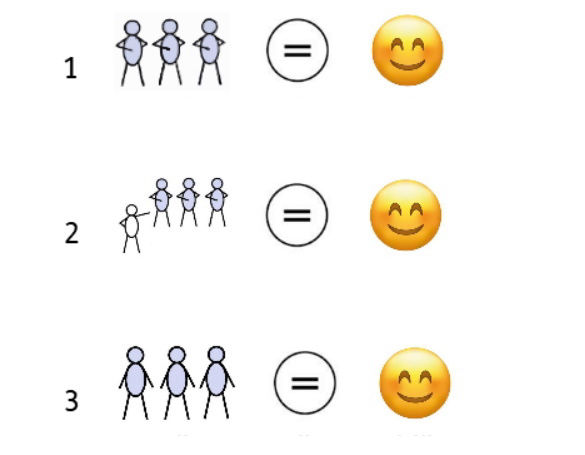
1. We are happy
2. You (all) are happy
3. They are happy
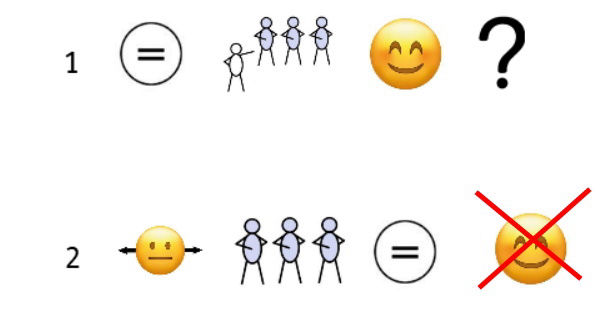
1. Are you (all) glad?
2. No, we are not glad
More feelings: I am ...
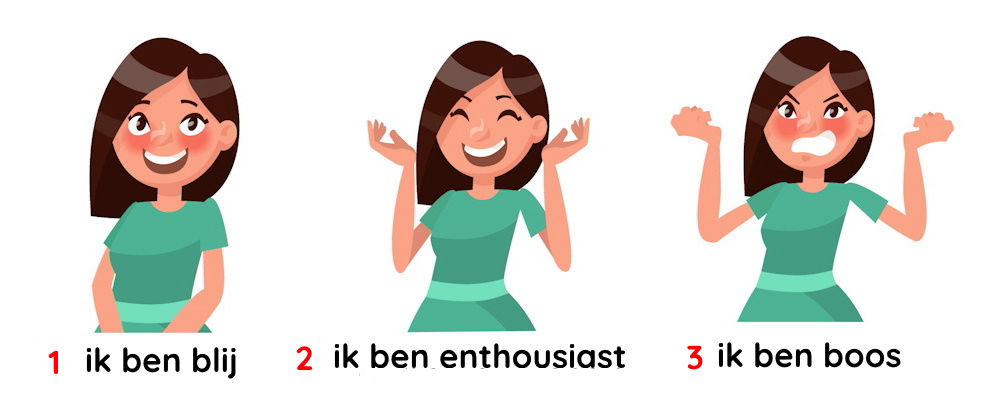
1 I am happy
2 I am enthusiastic
3 I am angry
- Ik ben verbaasd. — I am surprised.
- Ik ben bang. — I am afraid.
- Ik ben verdrietig. — I am sad.
4 I am surprised
5 I am afraid
6 I am sad
Test
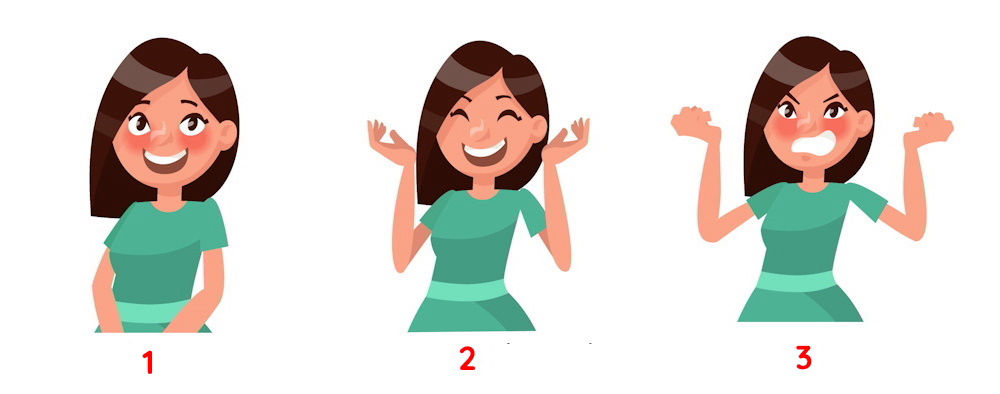
1. I am happy
2. I am enthusiastic
3. I am angry
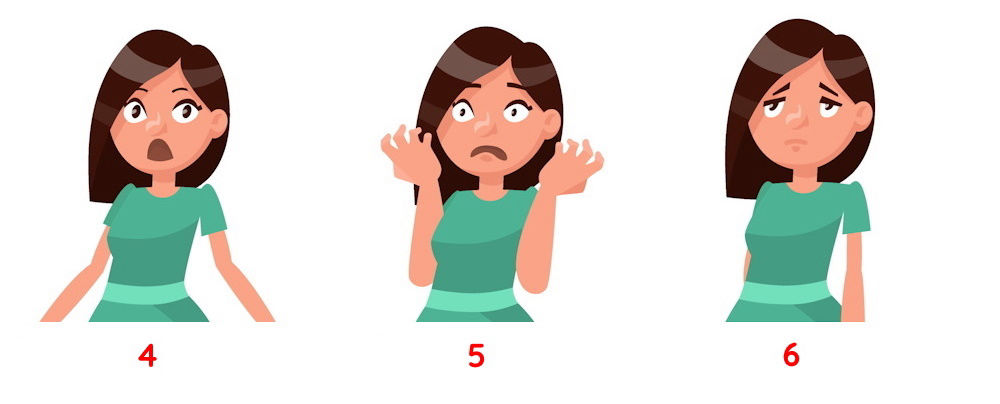
4. I am surprised
5. I am afraid
6. I am sad
Other ways to say “I am sad”
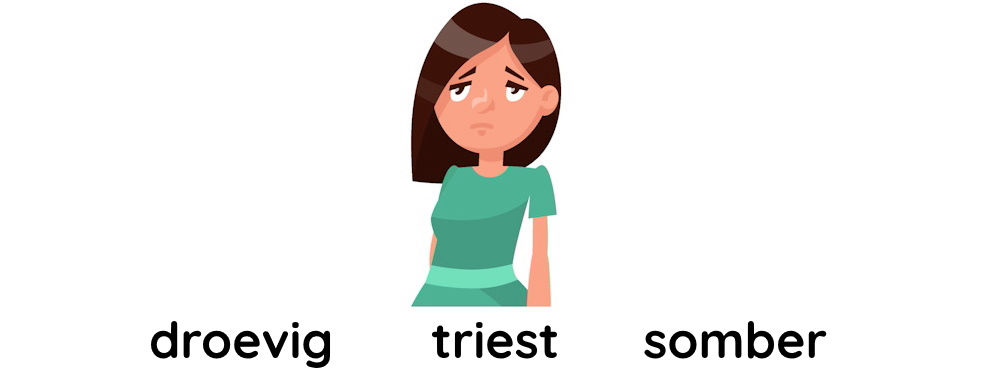
Three ways to say: I'm sad
The personal pronoun "het"
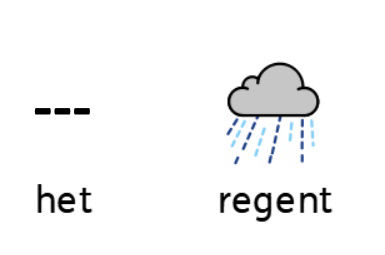
Personal pronouns can refer to people, animals or things. Het can refer to a het noun: Het boek is nieuw. Het is mooi. In weather expressions such as Het regent., het is a grammatical subject without referring to a particular thing.
it rains